2026 How to Choose Foot Support Insoles for Global Buyers?
Choosing Foot Support Insoles in 2026 requires more than comparing arch heights or colorful packaging. Global buyers now face different walking habits, shoe designs, climate conditions, and product standards. A factory worker in Germany may need firm heel control, while a retail employee in Singapore may prioritize breathable cushioning. The correct choice begins with the user’s movement, foot shape, footwear, and discomfort pattern.
Market evidence shows growing demand. Fortune Business Insights reported that the global insoles market was valued at approximately USD 4.62 billion in 2023 and is projected to expand steadily through 2032. The World Health Organization also estimates that about 1.71 billion people live with musculoskeletal conditions worldwide. These figures support wider interest in daily foot comfort, but they do not prove that every buyer needs an aggressive orthotic design. More cushioning is not always better.
Podiatrist and movement specialist Dr. Emily Splichal states, “The foot is the foundation of the body.” That principle makes product evaluation more practical. Buyers should examine arch support, heel stability, pressure distribution, material breathability, sizing accuracy, and replacement life. A good insole should feel supportive without forcing the foot into a rigid position. It should also fit the shoe, not merely look impressive on a product page. This is where many purchasing decisions fail. Claims can sound scientific while offering little measurement. A careful global buyer checks testing details, user guidance, return policies, and medical disclaimers before choosing Foot Support Insoles.
What Are Foot Support Insoles and Who Needs Them?
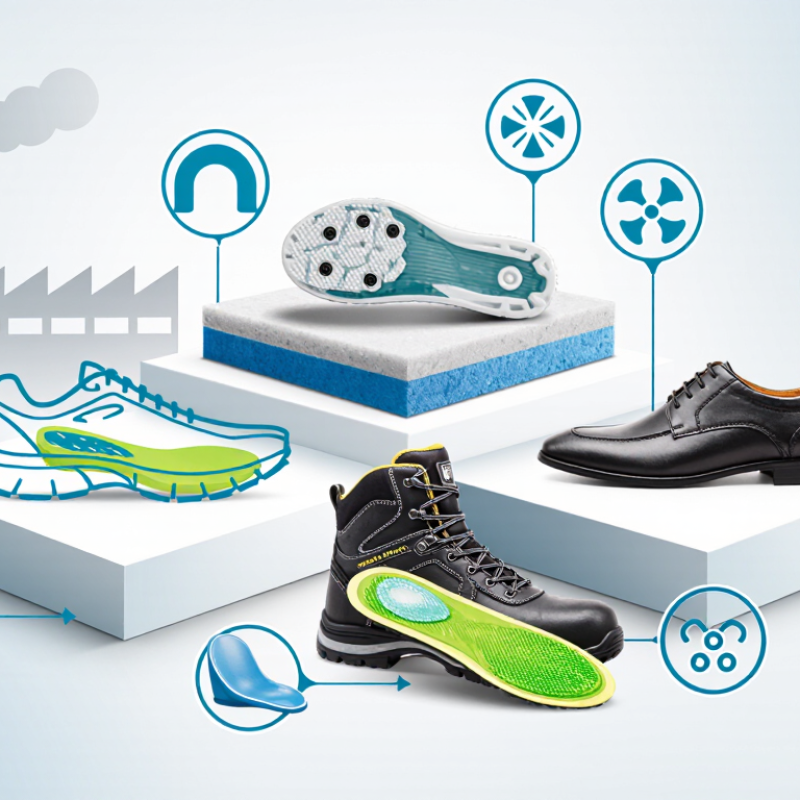
Foot support insoles are removable inserts placed inside shoes to improve comfort, pressure distribution, and stability. They may support the arch, cushion the heel, or reduce movement inside loose footwear. Some are soft and flexible, while others use firmer materials for controlled support. The right design depends on foot shape, shoe structure, and daily activity.
People with tired feet, mild arch discomfort, or heel pressure may consider them. Long-distance walkers, retail workers, travelers, and athletes often spend hours on hard surfaces. Insoles can also help users whose shoes provide little cushioning. However, they do not correct every foot problem. Persistent pain, swelling, numbness, or sudden changes deserve assessment from a qualified healthcare professional.
Fit matters more than appearance. I recommend checking whether the insole matches the shoe’s length and leaves enough room for the toes. A crowded toe box can create new pressure. Walk indoors for short periods first, then inspect the skin for redness or rubbing. Comfort should improve gradually, not through forced adjustment. I once assumed firmer support was always better, but that was too simplistic. Excessive stiffness can feel worse for some feet. Replace worn inserts when cushioning collapses or the shape becomes uneven.
How to Identify Your Foot Support Needs
Choosing foot support insoles starts with identifying your actual discomfort, not copying another buyer’s choice. The World Health Organization reports that musculoskeletal conditions affect about 1.71 billion people worldwide. Foot discomfort may involve the arch, heel, forefoot, or ankle. A 2014 American Podiatric Medical Association survey found that 77% of adults had experienced foot pain. However, pain alone does not prove that an insole is needed.
Observe when symptoms appear. Do they worsen after eight hours of standing? Does your heel hurt during the first morning steps? Check whether your shoes show heavier wear on one side. Flat arches may need gentle stability, while high arches often need cushioning and pressure distribution.
People with diabetes, numbness, swelling, or persistent pain should seek qualified medical advice before buying support products. Insoles cannot correct every underlying condition.
Tips: Test insoles inside your usual walking shoes. Leave enough toe room. Begin with short wear periods, perhaps one hour daily. Remove them if pain increases. Measure both feet late in the day, because foot length and width can change. Fit should feel supportive, not rigid. The first choice is rarely perfect. Recheck comfort after several days, and question whether the product solves pressure or merely hides it.
WHO, Musculoskeletal Health Fact Sheet, 2022; American Podiatric Medical Association, 2014 foot health survey.
How to Compare Fit, Comfort, Durability, and Safety
2026 How to Choose Foot Support Insoles for Global Buyers?
Fit should be checked before comfort claims. Measure both feet late in the day, when swelling is more likely. The insole should sit flat, without lifting the heel or squeezing the toes. Leave roughly a thumb’s width in front. A 2023 WHO fact sheet reports that low back pain affected about 619 million people in 2020, but insoles are not a universal treatment. They may help some users, not everyone.
Comfort depends on pressure distribution, cushioning, and breathability. Walk indoors for 20 minutes. Notice hot spots beneath the heel, arch, and forefoot. Foam can feel soft at first, yet excessive softness may reduce stability. I would compare comfort after several hours, not five minutes. A Cochrane review on foot orthoses found limited evidence for preventing some lower-limb problems, so strong promises deserve skepticism.
Durability requires practical testing. Inspect stitching, bonding, edge compression, and moisture resistance. Ask for material specifications, abrasion results, and repeated-load testing. Replace an insole when it stays visibly flattened or develops cracks. Safety also includes skin contact, odor control, slip resistance, and compatibility with the shoe. For sensitive users, request material safety documentation and check relevant ISO testing. A small mistake matters. Buyers should also review sizing charts, return terms, and regional testing requirements before placing large orders.
2026: How to Choose Foot Support Insoles for Global Buyers?
Compare common insole material categories across fit, comfort, durability, and safety. Ratings use a practical 1–5 scale based on typical material characteristics; actual performance depends on design, density, testing, and user needs.
Buyer takeaway: PU foam generally provides the strongest balance of comfort and long-term resilience, cork offers excellent durability and shape adaptation, EVA is lightweight and versatile, while gel focuses mainly on impact cushioning.
How to Select Reliable Insole Suppliers for Global Markets
Choosing reliable insole suppliers for global markets requires more than comparing prices. A dependable supplier should explain material density, arch support, cushioning, and size grading in clear technical documents. Ask for proof. Request recent test reports, production photos, sample records, and traceability details for foam, fabric, and adhesive materials. Their answers should match the physical samples.
In practical sourcing work, I check whether a supplier can repeat the same result across several batches. A sample may feel comfortable, yet mass production can expose weak bonding or uneven thickness. Test samples under walking pressure, moisture, temperature changes, and repeated compression.
Test before scaling.
Suppliers should also describe their quality-control checkpoints and explain how they handle rejected goods.
Global buyers need more than factory capacity. Confirm production lead times, minimum order quantities, packaging options, export documents, and communication routines. A reliable partner understands the requirements of each target market without making careless legal promises. Check independent certifications when relevant, but do not accept certificates without verification. No supplier looks perfect on paper. I would rather choose a transparent supplier with one clear limitation than an impressive supplier avoiding difficult questions. Small delays in sample revisions may reveal poor organization, though fast replies alone do not prove quality. Regular audits, written specifications, and agreed inspection standards create stronger confidence over time.





 Newsletter