2026 Top Golf Practice Equipment Buying Guide?
Choosing the right golf practice equipment can change an ordinary backyard session into focused, measurable training. This 2026 guide examines launch monitors, putting mats, alignment tools, training aids, practice nets, and portable accessories. Each product should serve a clear purpose, not simply occupy space in a crowded garage.
Harvey Penick, one of golf’s most respected instructors, often advised players, “Take dead aim.” That principle still matters. A useful training aid should help you aim better, repeat a movement, or understand ball flight. It should not promise instant improvement. Real progress comes from deliberate practice, accurate feedback, and patient repetition.
Small details matter. A putting mat with a true roll can reveal a weak start line. A sturdy net should absorb full shots without shifting across the lawn. A launch monitor needs dependable data, especially when distance gaps influence club selection. Weather, room size, noise, storage, and safety also affect the buying decision.
This guide uses practical testing criteria and established coaching principles. It considers setup time, durability, measurement accuracy, portability, and value. Still, no buying guide is perfect. Golfers have different swings, budgets, spaces, and expectations. A beginner may need simple alignment feedback, while a low-handicap player may prioritize spin data.
Expect useful comparisons, but think critically. The most expensive device is not always the best teacher. Consistency wins. During golf practice, equipment should support better decisions and more confident swings, one purposeful repetition at a time.
Understanding Golf Practice Equipment and Its Training Purposes
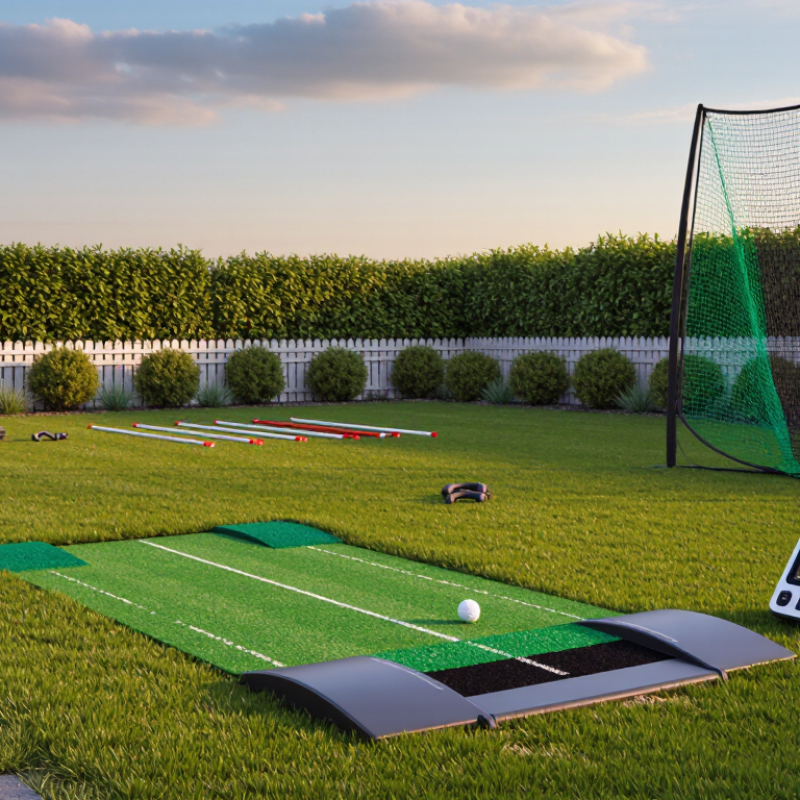
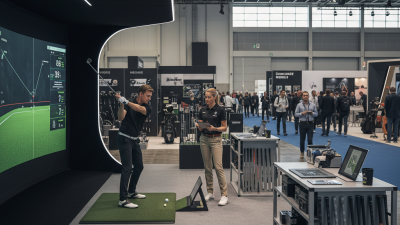
Golf practice equipment is useful only when its training purpose matches your current weakness. A quality practice setup may include a hitting mat, portable net, alignment sticks, and impact tape. Each tool answers a different question. The mat reveals stance and low-point consistency, while the net provides safe ball-flight feedback. A mirror can check posture, but it cannot prove a swing is effective. That distinction matters.
For distance control, use a launch monitor carefully and record carry distance, launch angle, and dispersion. Numbers become meaningful after repeated shots, not after one impressive swing. I prefer ten-ball sets with the same club and target. They expose fatigue and rushed tempo. However, affordable monitors may misread short chips or indoor shots. Treat estimates as guidance. A coach’s observation remains valuable when data conflicts with feel.
Putting gates train face control, while a small target cup develops pace awareness. Use them for short, focused sessions rather than endless repetitions. Stop before technique becomes careless. Resistance bands can activate the shoulders, yet they do not replace golf-specific movement. Foam balls help indoors, although their flight differs from a real ball. I still question whether every new device improves learning. Choose equipment that creates clear feedback, fits your space, and supports a measurable practice task.
2026 Top Golf Practice Equipment Buying Guide
Understanding Golf Practice Equipment and Its Training Purposes
The chart compares typical practice distances supported by common golf training equipment. Putting mats are designed for short-distance control, chipping nets support shots around the green, swing nets provide space for full-motion practice without a full ball flight, and outdoor practice areas allow complete trajectory and distance feedback. Actual distances vary according to facility size, equipment design, and local safety requirements.
Choosing Equipment Based on Skill Level, Space, and Practice Goals
2026 Top Golf Practice Equipment Buying Guide
Choosing Equipment Based on Skill Level, Space, and Practice Goals
Your skill level should guide every purchase. Beginners often need a stable mat, alignment sticks, and a forgiving practice net. These tools build contact and setup habits without overwhelming technical feedback. Intermediate players may benefit from a launch monitor that measures carry distance, ball speed, and launch angle. Advanced golfers usually need detailed club data, side protection, and enough room for full swings. Check measurement accuracy carefully. Indoor readings can differ from outdoor results.
Space changes the decision. Measure ceiling height, swing width, and the distance behind your net before ordering equipment. A compact room may suit a half-swing station, putting platform, or foam practice balls. Larger areas allow impact screens and full-flight tracking. Leave clear space around the hitting zone. Safety matters, even during quiet practice.
Tips: Match equipment to one clear goal. For slice correction, use alignment tools and face-angle feedback. For distance control, choose a monitor with reliable carry measurements. Test the setup for several sessions before buying accessories. My own practice area is not perfect; loose cables still create distractions. I would also question impressive specifications without independent testing, warranty details, and clear calibration instructions. Hands-on experience matters more than a crowded equipment list.
Comparing Essential Tools for Driving, Chipping, Putting, and Swing Training
2026 Top Golf Practice Equipment Buying Guide
Comparing Essential Tools for Driving, Chipping, Putting, and Swing Training
A useful practice setup should match the shot you miss most. The R&A’s 2024 Golf Participation Report recorded 108 million golfers worldwide in 2023. That growth makes affordable, focused practice increasingly important. A launch monitor can measure carry distance, launch angle, and dispersion during driving practice. It is more informative than judging every shot by feel. Still, indoor readings can differ from outdoor results.
For chipping, choose a landing mat with visible targets and several wedges. Practice low runners, standard pitches, and soft shots. A 2024 PGA TOUR performance review shows how strongly proximity affects scoring around the green. Small landing zones encourage better control. Putting needs a straight alignment aid, a level surface, and a simple pressure drill. The USGA’s putting research highlights face angle as a major influence on starting direction. Fancy equipment cannot fix a poor setup.
Tips: Use one tool for one goal. Record ten shots, not one perfect shot. For swing training, a mirror, impact bag, or tempo sensor can reveal movement changes. Video from face-on and down-the-line angles adds useful evidence. I sometimes chase speed too early. That habit creates tension and weak contact. A slower rehearsal may teach more. Equipment should expose mistakes, not hide them. Recheck measurements outdoors before changing your technique. Data helps, but personal feel still needs testing.
2026 Top Golf Practice Equipment Buying Guide? - Comparing Essential Tools for Driving, Chipping, Putting, and Swing Training
| Category |
Equipment |
Primary Training Goal |
Best For |
Typical Setup Space |
Skill Level |
Portability |
Typical Price Range (USD) |
| Driving |
Pop-Up Hitting Net |
Allows full swings without requiring a driving range. |
Ball-striking repetition and driver contact practice. |
Approximately 3 m × 3 m |
Beginner to advanced |
Folds for storage |
$80–$350 |
| Impact Screen with Frame |
Provides a durable target for indoor or enclosed practice. |
Players with a dedicated practice bay or simulator area. |
Approximately 3 m × 4 m |
Intermediate to advanced |
Semi-permanent |
$250–$1,200 |
| Foam or Limited-Flight Practice Balls |
Reduces risk and required space during controlled swings. |
Indoor practice, backyard use, and swing-pattern drills. |
From 3 m indoors; 10–30 m outdoors |
All levels |
Highly portable |
$10–$40 |
| Launch Monitor |
Measures selected ball-flight and club-delivery metrics. |
Players who want measurable feedback on swing changes. |
Indoor: 3–5 m; outdoor: range or open area |
Intermediate to advanced |
Portable to fixed |
$200–$20,000+ |
| Chipping |
Chipping Net |
Creates a visible target for short-game landing practice. |
Distance control and basic trajectory training. |
Approximately 2–8 m |
Beginner to advanced |
Folds for storage |
$30–$180 |
| Landing Zone Target |
Marks the intended first-bounce area on a mat or lawn. |
Wedge distance control and rollout management. |
Approximately 3–20 m |
All levels |
Highly portable |
$15–$100 |
| Practice Mat with Chipping Insert |
Replicates a consistent lie for repeated wedge contact. |
Players practicing from fairway-style lies indoors or outdoors. |
Approximately 1 m × 2 m |
Beginner to advanced |
Rolls or folds |
$70–$500 |
| Putting |
Putting Mat |
Offers a repeatable surface for start-line and pace drills. |
Indoor practice, especially during short sessions. |
1–4 m long |
All levels |
Rolls for storage |
$40–$500 |
| Putting Gate Set |
Creates a narrow path to test putter-face alignment and start line. |
Players working on directional control. |
1–3 m around the hole |
All levels |
Highly portable |
$10–$60 |
| Putting Mirror |
Provides visual feedback on eye position, shoulder alignment, and putter path. |
Players refining setup consistency and alignment. |
Approximately 1–2 m |
Beginner to advanced |
Portable with case |
$30–$180 |
| Swing Training |
Alignment Sticks |
Establishes target lines, ball position references, and body alignment. |
Fundamental setup and swing-direction drills. |
Approximately 2–5 m |
All levels |
Highly portable |
$10–$40 |
| Impact Bag |
Allows low-speed practice of impact position and body sequencing. |
Players developing a stable low point and forward shaft lean. |
Approximately 2 m |
Beginner to advanced |
Portable |
$40–$150 |
| Weighted Swing Trainer |
Encourages controlled tempo and awareness of swing sequence. |
Tempo work and warm-up routines; use carefully and without forcing speed. |
Approximately 2–3 m |
Intermediate to advanced |
Portable |
$50–$250 |
| Swing Video Tripod and Phone Mount |
Records the swing for visual review from face-on and down-the-line angles. |
Players who want technique feedback without specialized sensors. |
Approximately 2–5 m |
All levels |
Highly portable |
$20–$150 |
Buying note: Select equipment according to the skill being trained, available practice space, feedback quality, and safety requirements. Price ranges are typical 2026 consumer-market estimates in U.S. dollars and may vary by size, materials, measurement features, and included accessories.
Evaluating Technology, Materials, Accuracy, Durability, and Safety
2026 Top Golf Practice Equipment Buying Guide
In 2026, practice equipment should be judged by useful feedback, not impressive screens.
I prefer launch monitors that show carry distance, launch angle, spin, and shot direction clearly. Accuracy matters more than extra features. Test readings against known course markers when possible. Indoor nets also need enough depth and impact resistance. A small measurement error can change club selection and swing decisions.
Materials affect both feel and service life. Dense netting, reinforced seams, and stable frames handle repeated strikes better. Mats should cushion the joints without hiding poor contact. Very soft surfaces may feel comfortable but can distort turf interaction.
I once trusted a thick mat too much and developed shallow practice swings. That mistake was mine. Equipment can encourage bad habits.
Durability is not only about strong plastic or metal. Check moving parts, sensor mounts, cables, and weather protection. Safe equipment needs a wide base, secure anchors, and enough space behind the ball. Inspect nets for thinning fibers before every session. Keep people outside the swing and rebound zones. Eye protection is sensible during high-speed drills.
Technology also needs responsible interpretation. An accurate sensor cannot correct poor alignment or inconsistent ball quality. I still question readings that look perfect, especially after unusual shots. A reliable setup records trends over several sessions, rather than promising instant improvement.
Building a Practical Golf Practice Setup Within Your Budget
2026 Top Golf Practice Equipment Buying Guide
Building a practical golf practice setup starts with your available space, not the newest equipment. Measure your room, balcony, or backyard before spending money. A basic setup can include a hitting mat, practice net, alignment sticks, and a small basket of balls. This combination supports swing practice, contact drills, and setup checks without taking over your home.
My first practice area was too ambitious. I bought equipment that needed more room than I had. That mistake taught me to choose compact, adjustable tools. A stable mat matters because thin surfaces can feel harsh and shift during practice. A net should have a secure frame and enough depth for repeated shots. If your budget is limited, buy these essentials first. Add a launch monitor later, only if you can use its data consistently.
Tips: Set a spending limit before shopping. Leave money for replacement balls and basic maintenance. Practice with half swings before full swings, especially indoors. Check the net, mat, and nearby walls regularly. Keep at least a few feet of clearance around the hitting area. Phone video can reveal poor alignment, rushed tempo, or an unstable finish. It is not perfect, but it often shows details that feel invisible. A simple setup used three times weekly can be more valuable than expensive equipment used once.






 Newsletter