




The global market for ride-on toys is broad, but buyer needs vary by age group, climate, price point, and retail channel. A RIDE ON TOY may be a push-powered toddler car, a battery-powered mini vehicle, or a pedal-driven model. Each type serves a different purpose. Some suit smooth indoor floors; others handle garden paths and outdoor play more comfortably.
This guide explores the leading ride-on toy types global buyers may consider in 2026, including balance bikes, ride-on cars, scooters, and animal-shaped toys. It also looks at practical details: age and weight guidance, materials, battery runtime, wheel design, packaging, and replacement-part availability. Small details matter. A wide seat can improve comfort, while a bulky carton may raise shipping costs. Buyers should review product specifications and test documentation rather than rely on appearance or broad marketing claims. Requirements differ between markets, and supplier statements may need independent confirmation. There is no single best choice. A low-cost model may fit one sales channel yet disappoint where durability matters most. Even careful comparisons leave room for uncertainty, especially when products have not been tested in real conditions. The aim is to help buyers ask better questions and match each toy type with its intended users, sales market, and everyday use.
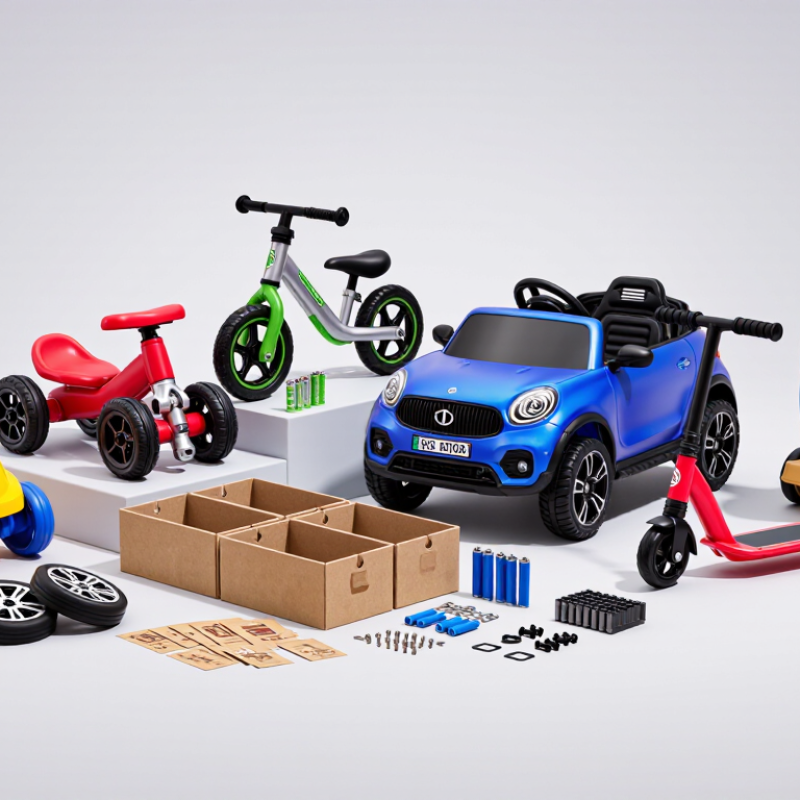
2026 Top Ride On Toy Types for Global Buyers
What Ride-On Toys Are and How They Are Classified
Ride-on toys are play products that children sit on, straddle, or stand on while moving. They may be powered by a child’s feet, pedals, a push from an adult, or a rechargeable battery. A small scooter board, a pedal tricycle, and a battery-powered car all fit this broad category. Their shapes differ, but each supports movement through play.
A practical classification starts with how the toy moves. Push toys rely on an adult or older child for momentum. Foot-powered models move when a child pushes against the ground, while pedal toys use a crank and pedals. Battery-powered versions use an electric motor and controls. Some toys are designed for indoor floors; others have wider wheels and sturdier frames for outdoor paths. Categories can overlap.
For buyers, the label alone says little about real-world use. Check the seat height, wheel material, turning space, and how easily a child can reach the controls. A toy that looks sturdy in a photo may feel awkward on a tiled floor. Not always obvious. Consider the child’s coordination and the intended surface, then review the maker’s age guidance and safety instructions. A simple classification helps, but hands-on assessment still matters.

Global buyers in 2026 will find several distinct ride-on toy types, each suited to different play spaces and rider abilities. Foot-to-floor cars and trucks let young children move by pushing with their feet. Push ride-ons add a handle for an adult, which can help during early outings. Pedal cars and tricycles require more coordination and work best where children have room to steer. Balance-style ride-ons encourage pushing and turning without pedals. Battery-powered vehicles offer motorized movement, but buyers should check speed settings, charging instructions, and the availability of replacement parts. Small details matter.
The best fit depends on the child’s age, the intended surface, and how the toy will be stored. A wide wheelbase may feel steadier on smooth indoor floors, while outdoor use calls for durable wheels and a sturdy frame. Check seat height, reachable controls, and pinch points, then review the supplier’s age guidance and care instructions. For international purchasing, request clear product specifications, packaging dimensions, spare-part details, and user manuals in suitable languages. Requirements and expectations can vary by market, so buyers should verify applicable local standards before ordering. A product chart can make choices look simple; real play spaces rarely are. A compact model may be easier to ship, yet its steering can feel cramped for some children. That trade-off deserves a close look.
Typical age ranges shown for widely available ride-on toy categories
Age ranges are indicative examples of common retail guidance, not universal limits. Recommendations vary by model and market; buyers should check each product’s labeling, safety requirements, and intended use.
A child’s age is a starting point, not a complete guide to choosing a ride-on toy. Balance, reach, and confidence matter just as much. For a new rider, a low, stable push toy lets both feet touch the ground. Wide wheels and simple steering can make turns easier to manage. Watch how the child moves: can they stop, look ahead, and steer around a cushion without tipping? Age charts help, but they can mislead. A chart is not a verdict.
As coordination grows, children may enjoy ride-on toys with pedals or balance bikes that encourage controlled movement. Choose a size that allows a comfortable seated position and easy access to the controls. Too much power or weight can outpace a child’s skills. Keep early practice on flat, open ground, away from traffic and steps, with close adult supervision. Fit a helmet when the toy and riding activity call for one, and follow the maker’s age and safety guidance.
Small details matter. Check that wheels roll smoothly and that brakes, if fitted, are within reach. A child who is hesitant today may be ready later; waiting is often the better choice.
2026 Top Ride On Toy Types for Global Buyers
Materials, Power Systems, and Features Across Toy Types
Ride-on toys range from simple foot-powered cars to battery-driven vehicles and pedal models. Each type places different demands on its materials. Molded plastic keeps many bodies lightweight and easy to wipe clean, while metal parts can add structure but may increase weight. Check seams, rounded edges, and wheel attachment points closely. Small details matter.
Power systems shape how a toy feels in daily use. Push and pedal models need no charging, but require more effort from the rider. Battery-powered toys can offer steady movement and simple controls; runtime depends on battery capacity, rider weight, terrain, and speed. Read charging and care instructions, and avoid assuming a larger battery always means a better fit. Not always.
Features should match the child’s size and surroundings. A low seat and broad wheels can help younger riders feel settled, while a tight turning radius may suit indoor play. Lights and sounds add stimulation, but can drain power or distract from riding. Compare weight limits, braking arrangements, seat position, and the space needed to turn. Specifications are useful, though they cannot show how a toy handles on a real floor. A careful fit check still matters.
| Toy type | Typical materials | Power or propulsion system | Common features | Buyer considerations |
|---|---|---|---|---|
| Push-powered ride-on vehicles | Molded polypropylene or HDPE body; plastic wheels; steel axles or fasteners on some models | Child propels the toy with their feet; no motor or battery | Low seat, steering wheel or handlebar, wide wheelbase; some models include a parent handle or storage area | Check the manufacturer’s age and weight limits, wheel stability, and suitability for the intended indoor or outdoor surface. |
| Pedal cars and pedal tractors | Steel or plastic frame and body; plastic or rubber wheels; metal pedal and axle components | Foot pedals drive the wheels through a direct-drive or chain-based mechanism, depending on design | Pedal-operated movement, steering, and sometimes a trailer or adjustable seat | Confirm pedal reach, assembly requirements, turning clearance, and whether the drive mechanism is enclosed or guarded. |
| Balance bikes | Aluminum, steel, or wood frame; rubber, EVA foam, or pneumatic tires; metal or plastic components | Child pushes along with their feet; no pedals, motor, or battery | Adjustable seat on many models; supports practice with balance, steering, and coasting | Select a frame and seat height suited to the child; use a properly fitted helmet and appropriate protective gear. |
| Battery-powered cars and trucks | Molded plastic body; steel or reinforced-plastic chassis parts; plastic or rubberized wheels | Rechargeable battery-powered electric motors; product configurations commonly include 6 V or 12 V systems | Forward and reverse controls, foot pedal, steering wheel, and—in some models—lights, sounds, or remote assistance | Check battery type, charging time, replacement availability, surface suitability, and specified age and load limits. Features vary by model. |
| Higher-voltage battery ride-ons | Plastic body panels with steel or reinforced-plastic structural components; wheel materials vary | Rechargeable battery and electric motors; 24 V systems are available in some larger ride-on models | May have multiple motor or speed settings, a larger seat, and controls designed for older or larger riders | Voltage alone does not determine speed or runtime. Check the actual specifications, age rating, maximum load, braking, and supervision guidance. |
| Ride-on motorcycles | Molded plastic body; metal or plastic frame components; plastic wheels, sometimes with rubberized contact surfaces | Foot-powered versions are available; motorized versions use a rechargeable battery and electric motor | Handlebar steering, straddle seat, and sometimes stabilizer wheels, lights, or sound effects | Review balance and stability, steering range, rider fit, and whether the intended riding area is flat and separated from traffic. |
| Ride-on tractors and construction vehicles | Molded plastic body and attachments; plastic wheels; metal parts may be used in axles or mechanisms | Foot-powered, pedal-powered, or battery-powered, depending on the model | Some models include a trailer, movable bucket, or other manually operated play attachment | Check attachment pinch points, stability on uneven ground, and whether removable parts are appropriate for the intended age group. |
| Ride-on go-karts | Steel or plastic frame; molded seat; plastic or rubber wheels; material construction varies by size and design | Pedal-driven models are common; some child-sized versions use rechargeable electric motors | Low seating position, steering wheel, and—in some pedal models—a chain drive or freewheel mechanism | Verify rider fit, braking method, drive-mechanism guarding, and recommended surface; use protective equipment where appropriate. |
Specifications, materials, age guidance, and included features vary by product and market. Buyers should review the product documentation and applicable local toy-safety requirements before purchase.
Ride-on toys may look simple, but buyers should compare more than age labels and advertised speed. Check seat stability, wheel grip, pinch points, braking, and whether a child can reach the controls while seated. For the US market, ASTM F963-23 became a mandatory toy safety standard through CPSC rules in April 2024; other destinations may apply different requirements, including EN 71 in Europe and the ISO 8124 series. Confirm the exact test scope and documentation for each market. A certificate alone does not show how a toy handles on a sloped driveway.
CPSC’s 2023 toy injury report estimated 231,700 emergency-department visits linked to toys among children aged 14 and younger. This covers toys broadly, not ride-on toys alone, so it should not be treated as a ride-on injury rate. Still, it makes age grading, speed limits, and clear caregiver instructions worth close review. Small wheels matter. Ask suppliers for test reports, material details, battery-charging guidance, and warnings in the destination market’s language.
Market demand also changes the comparison. Circana reported global toy sales rose 4% in 2024 across 12 tracked markets, but that figure covers the wider toy category, not ride-ons specifically. Buyers should weigh local climate, storage space, replacement-part access, and packaging volume alongside price. A heavy model may be durable, yet costly to ship. These trade-offs are easy to underestimate. Shipping assumptions deserve a second look.
Newsletter SignupUpcoming events, promo offers, member exclusives and more.
Golf Fanatics is a Chrysalis Enterprises Company owned by a group of like-minded individuals who share a common passion and affinity for golf, investing in successful Small-Medium-Enterprises, creating rewarding employment opportunities and being good industry participants and corporate citizens.
Monday
Tuesday
Wednesday
Thursday
Friday
Saturday
Sunday
9 a.m. – 10 p.m.
8 a.m. – 10 p.m.
8 a.m. – 10 p.m.
8 a.m. – 10 p.m.
8 a.m. – 11 p.m.
8 a.m. – 11 p.m.
8 a.m. – 9 p.m.
Copyright © 2025 · Golf Fanatics is a division of Chrysalis Golf Ventures Inc.
7100 15th St SE, Calgary AB
This site is protected by reCAPTCHA and the Google Privacy Policy and Terms of Service apply.

Need help? Call our support 24/7

Just a few things before you book…
While Toptracer Range technology and our automated ball dispensers are 99% reliable, there are rare instances when they do not function properly, especially during periods of inclement weather.
Please note that we do not guarantee the reliability of these services during any booking and will not provide you with a refund or credit if they do not function properly during your booking, therefore booking our services is fully at your discretion.
By booking our services, you acknowledge full responsibility for the cost of any intentional or unintentional damages to any Golf Fanatics or neighboring property and equipment caused by you or your guests during your booking.
You and your guests hereby agree to indemnify Golf Fanatics from any liabilities associated with any personal injury incurred by you or your guests during your booking.


