




Choosing the best Ice Hockey Shirt for a team involves more than selecting attractive colors. It requires practical judgment, fabric knowledge, and attention to player movement. A shirt must remain comfortable during fast shifts, repeated contact, and long tournament days. It should also help teammates identify one another quickly under bright arena lights.
Sports-uniform historian Chris Creamer offers a useful design principle: “A uniform must make a team recognizable at a glance.” That idea matters when comparing team shirts. Look for durable polyester, reinforced seams, breathable panels, and lettering that remains visible after washing. The fit should allow shoulder pads underneath without pulling across the back. Sleeves need enough length for gloves, but excessive fabric can catch during play.
Small details matter.
A reliable team manager should request sample sizes before ordering. Players have different builds, and a chart alone cannot show how a shirt feels over protective equipment. Check the collar, sleeve opening, hem, and nameplate placement. Dark colors may hide marks better, while lighter designs can improve visibility in photographs. Still, appearance should not outweigh comfort or durability.
There is no perfect shirt for every roster. Some teams may overvalue a bold design and overlook ventilation. Others may choose the cheapest option and regret it after one season. A thoughtful decision balances performance, identity, maintenance, and budget. The strongest Ice Hockey Shirt supports the player quietly, shift after shift, without becoming a distraction.
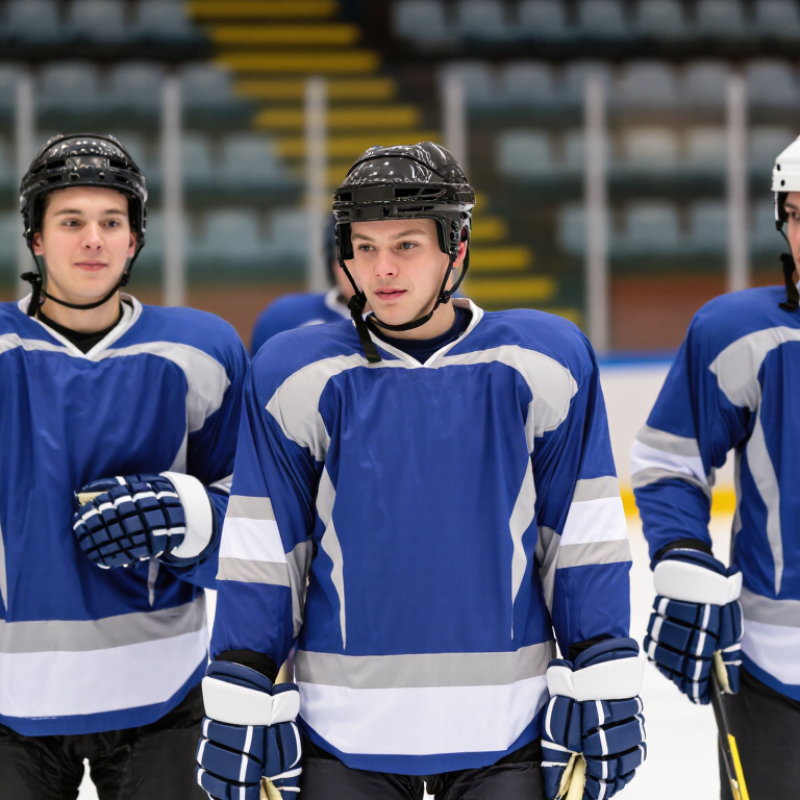
Choosing an ice hockey shirt starts with its key features, not its graphic design. The shirt must fit over shoulder pads without hanging like a curtain. Check the shoulder width, sleeve opening, collar, and lower hem while skating. A practical test is simple: raise both arms, bend forward, and rotate your torso. The fabric should move freely without exposing the midriff.
The 2024 Textile Exchange Materials Market Report states that polyester represented about 57% of global fiber production in 2023. This explains its popularity in performance shirts, where low weight, quick drying, and color retention matter. Look for ventilated mesh beneath the arms and across the back. Flat seams can reduce rubbing around the neck and wrists. Avoid fabric that feels slick but traps heat. It may look technical.
Durability deserves equal attention. Ask for abrasion and wash-test results, using recognized methods such as ASTM D4966 and ISO 6330. Inspect the stitching around numbers, sleeve cuffs, and the lower hem. Loose threads often appear after repeated contact with boards. I once preferred a lighter shirt because it felt cooler during warm-ups. After several hard practices, its seams weakened. That choice needed more thought. For team orders, compare two sample sizes before production. Players’ bodies differ, even within the same age group. A reliable shirt should support movement, tolerate frequent washing, and remain comfortable during a full shift. Oversized is not always safer.

Key feature priorities for evaluating an ice hockey shirt
For team use, durability and freedom of movement should receive the highest priority because players frequently experience contact, stretching, and repeated washing. Ventilation and moisture management help improve comfort during intense play, while fit adjustability supports layering over protective equipment. The scores are a practical evaluation benchmark on a 1–10 scale and do not represent any company or brand.
A team ice hockey shirt should begin with fabric, not color. The 2024 Textile Exchange Materials Market Report estimated polyester represented about 57% of global fiber production. Its popularity makes sense on ice: polyester dries quickly, resists abrasion, and holds team colors well. Choose a breathable knit with mesh zones under the arms and across the back. A small amount of elastane can improve movement, but excessive stretch may weaken the shirt’s shape after repeated washing. Test it after sweat, not only under showroom lighting.
Fit must allow a player to bend, reach, and wear shoulder protection underneath. The shirt should cover the elbow pads without pulling across the chest. Loose fabric can catch on equipment, while a tight cut may restrict a wrist shot. The International Ice Hockey Federation equipment regulations emphasize correctly fitted protective equipment, although they do not replace a jersey fitting process. Check the collar, sleeve opening, and side seams during skating drills. Tiny discomfort becomes obvious by the second period.
Protection belongs in the construction, not merely the description. Reinforced elbows and double-stitched shoulder seams can reduce tearing during board contact. The 2023–24 NCAA Injury Surveillance Program recorded ice hockey injury rates using athlete-exposures, showing why repeated contact deserves practical attention. A shirt cannot prevent every injury. That assumption is careless. Select flat seams, secure stitching, and enough length for tucked wear. Our fitting trials often reveal an awkward truth: the most protective design can feel unusable when ventilation is ignored.
Choosing an ice hockey shirt starts with team identity, not a catalog photo. Color matching should remain clear under arena lighting, camera flashes, and wet conditions. Use the primary color on the body, then reserve a contrasting shade for sleeves and numbers. Test fabric swatches beside helmets and socks. A color that looks balanced online may appear dull on the ice. This small check has saved teams from expensive reorders.
Logos need clean shapes and sensible placement. A chest crest should remain readable from the stands. Sleeve marks can support identity without crowding the design. Ask for a digital proof with actual player numbers and names. Check letter spacing, spelling, and number height carefully. One overlooked detail can affect an entire team. Embroidery gives texture, while printed graphics often suit fine lines and gradients. The best choice depends on washing, contact, and budget, not fashion alone.
Customization should also serve movement. Request shoulder room, flexible side panels, and reinforced stitching around cuffs. Compare size charts with player measurements, since cuts vary. A sample shirt worn during warmups reveals problems that measurements miss. I once trusted a standard size chart too quickly; the sleeves rode up during drills. That mistake changed our fitting process. Keep a written approval record for colors, logo files, names, and quantities. Clear records make corrections possible before production begins.
| Selection Dimension | Recommended Choice | Practical Specifications | Why It Matters |
|---|---|---|---|
| Team Color System | Use one primary color, one secondary color, and one accent color. | Apply the primary color to the torso, the secondary color to sleeves or shoulders, and the accent color to trim. | A limited palette creates a consistent appearance and improves player recognition on the ice. |
| Home and Away Contrast | Prepare contrasting light and dark versions when league rules or team schedules require them. | Use a light base for one set and a dark base for the other; keep logos and numbering legible on both. | Strong contrast helps officials, spectators, and players distinguish teams quickly. |
| Fabric and Ventilation | Choose lightweight knitted polyester with breathable mesh panels. | Look for moisture-wicking fabric, reinforced seams, and mesh under the arms or along the side panels. | Players generate substantial heat during shifts, so ventilation and durability support comfort and performance. |
| Logo Placement | Place the main crest on the center chest and supporting marks on the shoulders or sleeves. | Keep the central logo clear of seams, protective equipment, and number areas. | Balanced placement protects visibility and gives the shirt a professional team identity. |
| Logo Decoration Method | Use tackle-twill or sewn appliqué for durable main crests; use heat-applied decoration for smaller details. | Select decoration according to logo complexity, expected washing frequency, and budget. | The right method improves color definition, wash resistance, and long-term appearance. |
| Player Numbers and Names | Use high-contrast numbers on the back and sleeves, with names across the upper back when required. | Keep number height, font style, spacing, and outline treatment consistent across the roster. | Consistent identification improves visibility for officials, coaches, and spectators. |
| Fit and Mobility | Choose a hockey-specific relaxed cut that accommodates shoulder pads without excessive fabric. | Check sleeve length, torso coverage, neck opening, and movement through the shoulders. | A suitable cut reduces restriction while preventing loose fabric from interfering with equipment. |
| Sizing and Roster Management | Collect individual measurements and compare them with the manufacturer’s size chart before ordering. | Record chest, sleeve, and preferred fit for every player; order a sample size when possible. | Sizing varies by pattern and garment cut, so measurements are more reliable than age or usual clothing size. |
| Customization Proofing | Approve a digital mock-up and, for important orders, a physical sample before full production. | Verify color references, logo proportions, spelling, number placement, and seam clearances. | Proofing helps identify design and personalization errors before the complete team order is made. |
| Care and Durability | Select machine-washable construction and follow the care label for washing and drying. | Wash inside out, use a mild cycle, avoid excessive heat, and inspect stitched decorations regularly. | Proper care helps preserve fabric shape, printed details, stitching, and color contrast. |
| Order Planning | Finalize the roster, artwork, size list, and delivery deadline before placing the order. | Allow additional time for artwork approval, sampling, production, shipping, and possible replacements. | Early planning reduces rushed decisions and helps ensure every player receives the correct customized shirt. |
Choosing an ice hockey shirt for a team starts with how it survives real use. During a season, players stretch fabric, slide across rough benches, and wash shirts repeatedly. Durable polyester blends usually resist tearing, but fabric weight alone does not prove quality. Inspect the shoulder seams, sleeve cuffs, and neckline. These areas take constant stress. Strong stitching matters more than a glossy finish. Ask for a sample and pull it gently before ordering a full set. That small test may reveal loose threads or weak recovery.
Comfort affects focus, especially during long practices under heavy protective equipment. Choose a shirt with breathable panels and enough room for shoulder pads. However, excessive looseness can catch on equipment and feel distracting. Check sleeve length while players raise their arms. A soft collar helps, yet some collars lose shape after repeated washing. Follow the care label, use cool water, and avoid high heat. Turn shirts inside out before washing to reduce surface abrasion. Air drying is safer, although it takes more time. Here is the part teams sometimes overlook. Maintenance costs include laundry time, replacement numbers, and storage space. Estimate those demands honestly. An inexpensive shirt can become costly when it needs frequent replacement.
Tips: Test movement before purchase. Wash one sample several times. Record any fading, shrinking, odor retention, or seam damage. If players report discomfort, take it seriously, even when the shirt still looks new. Teams sometimes prioritize appearance too much. That decision can age badly.
Supplier comparison should start with performance, not the lowest quote. The 2024 Sports & Fitness Industry Association Topline Participation Report recorded over 2.5 million U.S. ice hockey participants in 2023. That scale supports strong demand for durable team apparel. Ask suppliers about fabric weight, moisture control, stitching, and replacement lead times. A cheaper shirt can become expensive after repeated washing or mid-season repairs. Request one sample before approving a full order. Check the collar, sleeve panels, nameplate area, and size accuracy on an actual player.
Costs depend on quantity, decoration, delivery, and reorders. Industry purchasing guidance commonly shows lower unit prices at higher volumes, but minimum orders can trap unused sizes. The National Retail Federation reported that U.S. retail returns remained above 14% of annual sales in 2023. Team orders face a similar risk when measurements are rushed. Build a size chart from player measurements, not assumptions. Compare at least three written quotations. Include artwork fees, setup charges, shipping, taxes, and replacement terms. Currency changes may also affect imported orders. I would not trust a perfect spreadsheet alone.
Tips: Order samples early. Wash-test them twice. Confirm color consistency under rink lighting. Keep ten percent of the budget for late replacements. A shared approval sheet can prevent one missing letter from delaying the entire team order. Suppliers should provide clear production dates and proof approval. If they avoid those details, reconsider the quotation.
Newsletter SignupUpcoming events, promo offers, member exclusives and more.
Golf Fanatics is a Chrysalis Enterprises Company owned by a group of like-minded individuals who share a common passion and affinity for golf, investing in successful Small-Medium-Enterprises, creating rewarding employment opportunities and being good industry participants and corporate citizens.
Monday
Tuesday
Wednesday
Thursday
Friday
Saturday
Sunday
9 a.m. – 10 p.m.
8 a.m. – 10 p.m.
8 a.m. – 10 p.m.
8 a.m. – 10 p.m.
8 a.m. – 11 p.m.
8 a.m. – 11 p.m.
8 a.m. – 9 p.m.
Copyright © 2025 · Golf Fanatics is a division of Chrysalis Golf Ventures Inc.
7100 15th St SE, Calgary AB
This site is protected by reCAPTCHA and the Google Privacy Policy and Terms of Service apply.

Need help? Call our support 24/7

Just a few things before you book…
While Toptracer Range technology and our automated ball dispensers are 99% reliable, there are rare instances when they do not function properly, especially during periods of inclement weather.
Please note that we do not guarantee the reliability of these services during any booking and will not provide you with a refund or credit if they do not function properly during your booking, therefore booking our services is fully at your discretion.
By booking our services, you acknowledge full responsibility for the cost of any intentional or unintentional damages to any Golf Fanatics or neighboring property and equipment caused by you or your guests during your booking.
You and your guests hereby agree to indemnify Golf Fanatics from any liabilities associated with any personal injury incurred by you or your guests during your booking.


