What is a Golf Course? Understanding Types, Features, and Playability Factors
A golf course is more than just a sprawling expanse of neatly manicured grass; it is a complex interplay of design, strategy, and nature that has evolved over centuries. According to the National Golf Foundation, there are over 15,000 golf courses in the United States alone, catering to millions of players and enthusiasts. A well-designed golf course can significantly enhance the experience of the game, influencing not only playability but also player satisfaction and engagement. Understanding the various types of golf courses, their unique features, and the critical factors that affect playability is essential for both seasoned golfers and those new to the sport.
The layout and landscape of a golf course can vary tremendously, from links courses by the seaside to parkland settings characterized by trees and water features. Each type offers distinct challenges and requires different skills from the players. Furthermore, factors such as course maintenance, environmental considerations, and technological advancements in design continue to shape how golf courses are developed and experienced. As the golfing landscape adapts to changing demographics and societal trends, the importance of recognizing these attributes of a golf course has never been more vital for sustaining interest and participation in this beloved sport.
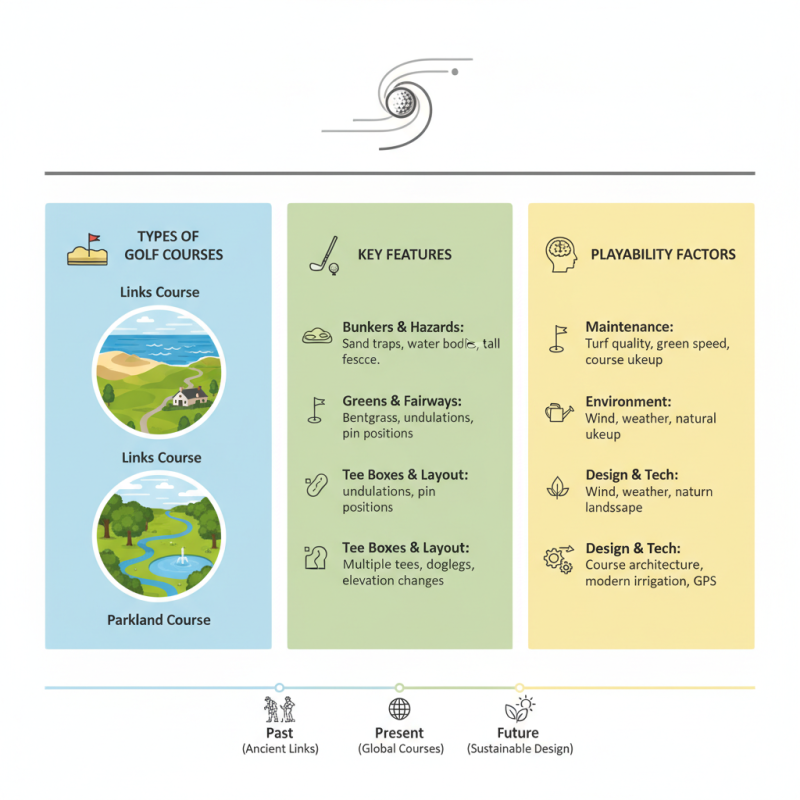
What is a Golf Course?
A golf course is a specially designed outdoor area where the game of golf is played. Typically comprising 18 holes, each golf course features varying terrain, including fairways, greens, bunkers, and water hazards. The layout of a golf course is meticulously crafted to challenge players of all skill levels while providing an enjoyable environment to appreciate the sport and nature simultaneously. Various types of courses exist, such as links, parkland, and desert courses, each offering unique characteristics and playability.
When approaching a golf course, it’s essential to understand its features and how they can affect gameplay. For instance, the type of grass on the greens can significantly influence the speed and roll of the ball. Additionally, elevation changes and weather conditions play critical roles in your overall performance.
Tips: Familiarize yourself with the course layout before play; studying scorecards and maps can provide valuable insights into each hole’s challenges. Also, take note of the wind direction as it can affect your shots. Understanding your own strengths and weaknesses will help you strategize effectively, allowing you to navigate the course with greater ease.
Types of Golf Courses: Public, Private, and Resort
When considering the types of golf courses, the primary distinctions arise between public, private, and resort courses. Public courses are typically open to everyone and tend to be more affordable, making them a popular choice for casual players and beginners. According to the National Golf Foundation, approximately 60% of golf courses in the U.S. are public. These courses often feature less challenging layouts, focusing on accessibility and enjoyment for a broad audience.
Private courses, on the other hand, require membership and are generally characterized by exclusive amenities and services. They often attract more serious golfers and may host competitive events. A report by the Golf Industry Show indicates that private courses account for about 20% of golf facilities, and members typically enjoy greater customization of their experience, often including personalized coaching and exclusive social events.
Resort courses, which blend leisure and golfing, offer an additional layer of luxury and scenic beauty often found in vacation destinations. These courses cater to tourists, making them a critical component of the hospitality industry. The same foundation reports that resort courses have seen consistent growth in demand as they provide an all-in-one experience.
**Tips:**
1. When visiting public courses, consider playing during off-peak hours to enhance your experience.
2. If you’re thinking about joining a private club, ensure you attend guest events to get a feel for the community before committing.
Key Features of Golf Courses: Layout, Hazards, and Greens
When it comes to understanding golf courses, the layout and features play a pivotal role in determining the overall playability of the course. A well-designed course typically consists of 18 holes, each varying in length, difficulty, and strategic challenges. The configuration of these holes is essential, as it dictates how a player must approach each shot, whether through doglegs, elevation changes, or open fairways. Additionally, the distance between tees and greens provides different levels of challenge tailored for players of all skill levels, emphasizing both precision and strategy.
Hazards are another critical aspect that shapes the character of a golf course. These can include bunkers, water features, and trees, all of which are strategically placed to challenge golfers and influence their shot selection. Bunkers, for instance, require skillful sand play, while water hazards can invoke a sense of risk that alters a player’s decision-making process. Furthermore, the greens themselves are vital to the course's playability. Their size, slope, and surface conditions can greatly impact putting performance, with undulating greens often requiring a blend of speed control and reading breaks accurately. Together, these features not only enhance the aesthetic appeal of the course but also test the golfer’s abilities and decision-making throughout their round.
Understanding Playability Factors: Weather, Terrain, and Course Design
The playability of a golf course is influenced significantly by various environmental and design factors. Weather conditions such as temperature, humidity, wind speed, and precipitation can impact not only the physical layout but also the player's performance. According to the National Golf Foundation, about 78% of golfers consider weather as a primary factor when selecting when and where to play. For instance, a course that experiences frequent rain may have muddy fairways, while excessive heat can lead to dry and hard playing surfaces, both of which affect the overall play experience.
Terrain and course design also play crucial roles in determining playability. The slope, length, and layout of a golf course can challenge players of different skill levels. Data from the Golf Course Superintendents Association of America shows that courses with more diverse terrains, including undulating greens and strategically placed hazards, are often rated higher in terms of playability. This diversity not only tests a golfer's skill but also enhances the enjoyment and engagement of the game. Additionally, well-designed courses take into consideration accessibility and challenge, providing golfers with a balance that keeps them coming back to play.
What is a Golf Course? Understanding Types, Features, and Playability Factors
| Type of Golf Course |
Key Features |
Playability Factors |
| Public Course |
Open to general public, often affordable, varied layouts |
Weather conditions, course maintenance, user volume |
| Private Course |
Exclusive access, often higher quality maintenance, member-only |
Membership levels, exclusivity, course design variety |
| Resort Course |
Located near resorts, designed for tourists, scenic vistas |
Weather, seasonal playability, guest amenities |
| Links Course |
Coastal, sandy soil, often firm and fast, natural terrain |
Wind conditions, elevation changes, natural hazards |
| Championship Course |
Designed to host tournaments, longer distance, challenging layouts |
Conditioning reliability, setup for tournament play, spectator factors |
| Executive Course |
Shorter holes, designed for quick play, suitable for beginners |
Time constraints, player skill levels, weather impact |
| Par 3 Course |
All holes are par 3, focuses on short game, often for new players |
Accessibility, weather patterns, beginner-friendly layout |
The Role of Golf Courses in Environmental Conservation and Community Wellness
Golf courses play a significant role in
fostering environmental conservation and enhancing
community wellness. According to a report
from the National Golf Foundation, there are over 15,000 golf courses in
the United States, and many of these spaces serve as crucial green areas that support
local ecosystems. By providing habitats for diverse wildlife and featuring landscapes that
incorporate native plants, golf courses contribute to biodiversity and help to mitigate
urban heat islands. This ecological
preservation is vital, particularly in urban settings where green spaces are scarce.
Moreover, the presence of golf courses contributes positively to community health.
Studies indicate that walking a golf course can cover around 4–5 miles,
promoting physical activity and reducing the risk of chronic diseases. Research from the
American College of Sports Medicine highlights that engaging in recreational activities
in natural settings can improve mental health and decrease stress levels. Golf courses
thus serve as inclusive venues for community gatherings, encouraging social interaction
and facilitating a shared appreciation for the environment. Their design often incorporates
walking paths and other amenities that make them accessible for all ages, enhancing
overall community wellness while preserving natural landscapes.











 Newsletter