



China Top 10 Mini Golf Course Manufacturers?

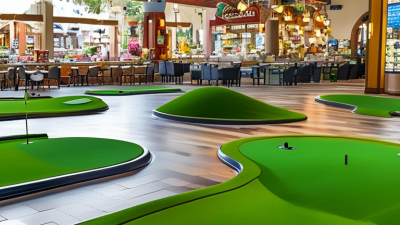
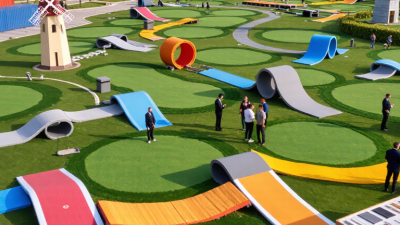
Choosing among China’s top 10 mini golf course manufacturers requires more than comparing colorful layouts and attractive prices. A reliable supplier should combine practical design experience, stable production, clear communication, and responsive after-sales service. This guide introduces manufacturers that may support indoor attractions, outdoor leisure parks, hotels, family entertainment centers, and commercial developments.

The comparison will consider design capability, material quality, manufacturing capacity, installation support, customization, and export experience. Details matter. For example, durable artificial turf should handle repeated foot traffic, while fiberglass obstacles need smooth surfaces and weather-resistant coatings. Modular panels can simplify transportation and future repairs. Lighting, drainage, safety edges, and accessible pathways also deserve careful review.

Not every manufacturer performs equally well in every project. Some may excel at creative themes, while others offer stronger engineering or faster delivery. A polished website is not enough evidence. Buyers should request drawings, material specifications, project photographs, references, and realistic maintenance guidance. Factory communication can reveal more than promotional language.

This is only a starting point.

The final choice should match the site, budget, climate, audience, and expected daily traffic. A small indoor venue needs different solutions from a coastal outdoor resort. Delivery schedules and installation responsibilities must be confirmed in writing. Warranty terms should be examined closely, especially for turf, lighting, coatings, and moving elements. Even experienced buyers may overlook long-term upkeep. That is worth reconsidering. A successful mini golf course depends on consistent safety, memorable play, and dependable support after opening.
China Top 10 Mini Golf Course Manufacturers?

How China’s Top 10 Mini Golf Course Manufacturers Are Selected

China Top 10 Mini Golf Course Manufacturers?
How China’s Top 10 Mini Golf Course Manufacturers Are Selected

Selecting China’s top ten mini golf course manufacturers requires more than comparing catalog photos. The evaluation begins with verified production experience, completed project records, and technical staff capability. Manufacturers should show how they design layouts, produce obstacles, and manage installation details. Site photographs, material samples, and client references provide useful evidence.

Product safety and durability receive close attention. Reviewers examine fiberglass surfaces, steel frames, artificial turf, drainage systems, and impact-resistant coatings. Outdoor courses must tolerate sunlight, rain, repeated foot traffic, and seasonal temperature changes. Clear testing documents and consistent quality controls strengthen a manufacturer’s position. However, documents alone cannot prove every field result.

The selection also considers customization, communication, delivery performance, and after-sales support. A capable manufacturer can adapt hole lengths, themes, lighting, signage, and accessibility features to a specific site. Detailed drawings and realistic production schedules matter. So does practical advice when a design looks attractive but creates maintenance problems. Pricing is reviewed carefully, but the lowest quotation is not automatically the best value. Some evidence may remain incomplete, and customer feedback can be uneven. That limitation deserves honest attention. On-site performance often reveals more than polished presentations. Manufacturers with transparent records, responsive engineers, and repeatable workmanship receive stronger consideration.

Profiles of China’s Top 10 Mini Golf Course Manufacturers

China’s Top 10 Mini Golf Course Manufacturers

China’s leading mini golf course manufacturers serve resorts, malls, family centers, and outdoor parks. Their capabilities differ considerably. One specializes in modular fiberglass obstacles. Another focuses on galvanized steel frames and long-term outdoor use. A third develops compact indoor layouts for spaces below 500 square meters. Two manufacturers provide themed scenery, including artificial rocks, tunnels, bridges, and illuminated features. Another produces portable courses for seasonal events. The remaining four combine design, CNC cutting, surface coating, installation, and maintenance support. These profiles reflect manufacturing strengths, not a fixed ranking.

Market demand supports this diversity. Grand View Research valued the global amusement parks market at about USD 61 billion in 2023. Its forecast also indicates continued growth through 2030. IAAPA’s 2024 industry outlook highlights location-based entertainment and repeat visitor experiences as important investment areas. Practical details matter here. Buyers should inspect drainage channels, ball-return systems, anti-slip coatings, and replacement-part availability. A visually impressive obstacle can still fail under heavy rain. That lesson is easy to overlook. Factory quality documents should include material thickness, coating tests, electrical safety records, and installation tolerances. Some suppliers communicate well before payment, then respond slowly after delivery. This weakness deserves more attention. Independent sample checks, clear warranty terms, and a verified installation schedule reduce avoidable project risks.

Key Products and Design Capabilities of Each Manufacturer

China’s Top 10 Mini Golf Course Manufacturers: Key Products and Design Capabilities

China’s leading mini golf manufacturers usually serve resorts, family centers, hotels, schools, and commercial entertainment venues. Their product ranges often include modular putting greens, artificial turf, fiberglass obstacles, themed props, lighting systems, scoreboards, and weather-resistant flooring. A 2024 global recreation market report estimated the miniature golf sector at roughly US$2 billion, although figures vary by definition and region. That uncertainty matters when comparing suppliers.

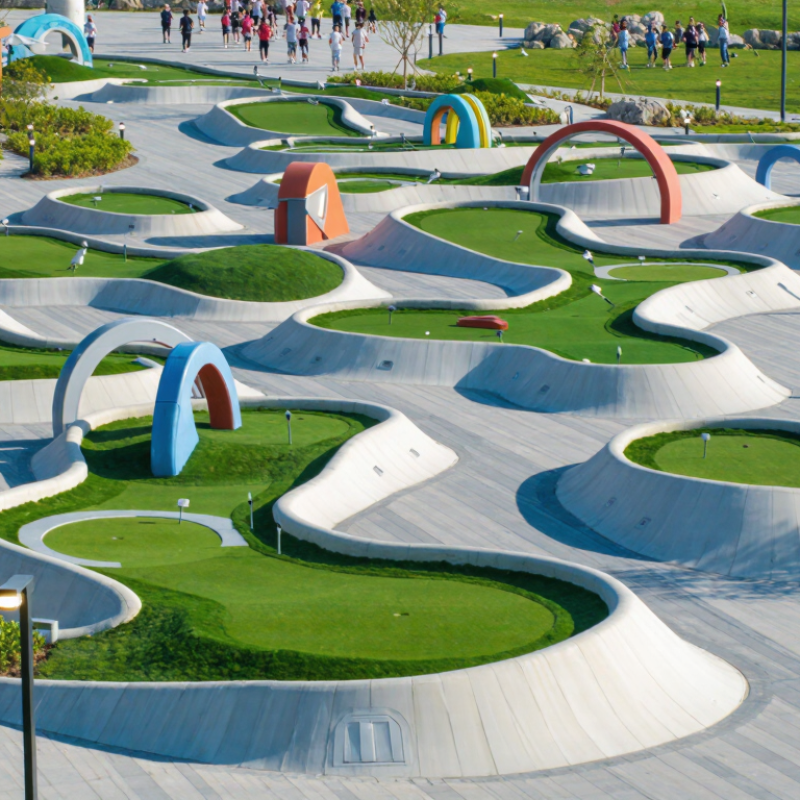
The strongest ten suppliers are typically separated by design capability, not factory size. Some offer compact nine-hole systems for indoor spaces. Others develop 18-hole courses with rockwork, water features, jungle scenes, or custom architectural themes. Their engineering teams commonly provide CAD layouts, 3D renderings, drainage planning, safety padding, and installation guidance. Several also use UV-resistant turf and reinforced fiberglass for high-traffic locations. Practical experience suggests that maintenance access should be designed early. It is often overlooked.

Export-focused manufacturers usually support container packing, bilingual drawings, replacement parts, and on-site installation. Product customization can include logo-free themed elements, adjustable obstacles, and accessible lanes for different players. Industry facility reports commonly identify safety, durability, and repeat visitation as major investment factors. Yet visual design alone does not guarantee profit. Poor drainage, weak lighting, or difficult repairs can damage the guest experience quickly. Buyers should request material samples, load tests, warranty terms, and completed project evidence before selecting a supplier. Estimates remain imperfect, so local climate and operating data deserve greater weight than rankings.

China Top 10 Mini Golf Course Manufacturers: Key Products and Design Capabilities

The chart presents common, non-company-specific planning benchmarks used when comparing mini golf course manufacturers, including course formats, hole count, par structure, and group capacity. Exact specifications vary by project, site, and local safety requirements.

Manufacturers typically combine modular course panels, themed obstacles, water-resistant finishes, lighting systems, signage, custom layouts, installation support, and maintenance guidance. A standard 18-hole format commonly uses par 2 per hole, resulting in a total par of 36.

Quality Standards, Customization, and Production Services

Choosing among China’s top 10 mini golf course manufacturers requires more than comparing catalog photos. Quality begins with measurable standards. Ask about plywood grades, fiberglass thickness, surface coating, slip resistance, and drainage performance. Outdoor courses should withstand sunlight, rain, temperature changes, and repeated visitor traffic. Request material reports, production photos, and sample panels before signing a large order.

Experienced manufacturers usually provide complete production services, including concept drawings, CAD layouts, prototypes, obstacle fabrication, lighting, packaging, and installation guidance. A reliable team should confirm dimensions in writing. It should also explain tolerances, replacement parts, maintenance needs, and delivery stages. Factory inspections can reveal useful details, such as uneven edges, weak welds, or poorly sealed joints. These small flaws become expensive problems after installation.

Customization should support playability, not only visual impact. Discuss course length, hole difficulty, theme elements, colors, signage, accessibility, and local climate. A practical supplier can adjust obstacles for children, families, or competitive players. However, customization sometimes creates compromises. A dramatic water feature may increase maintenance. Complex lighting may complicate repairs. No sample is perfect. I would test one complete hole before approving the full batch. Clear drawings, documented inspections, and responsive after-sales support make the final decision more dependable.

How to Compare and Choose a Chinese Mini Golf Manufacturer

China Top 10 Mini Golf Course Manufacturers?

How to Compare and Choose a Chinese Mini Golf Manufacturer

When comparing Chinese mini golf manufacturers, inspect more than their rankings or online galleries. Ask for factory photos, project references, material specifications, and detailed production schedules. A reliable supplier should explain surface layers, fiberglass thickness, drainage design, lighting, and artificial grass maintenance. Vague answers create expensive problems later.

Request a sample design based on your site measurements. Check whether the manufacturer can adapt obstacles, paths, ramps, and landscaping to local conditions. Review safety edges, slip resistance, accessible routes, and electrical protection with qualified professionals. The cheapest quotation often excludes foundations, shipping, installation, or replacement parts. Read every line.

Experience matters on site. Ask who supervises installation and how defects are recorded. Speak with previous clients, not only selected testimonials. A capable team should provide drawings, packing details, inspection procedures, and clear warranty terms. Factory audits can reveal useful details, including storage conditions and quality control records. Still, no supplier is perfect. I would question any company promising instant delivery, zero maintenance, or identical results for every climate. Confirm export documents and applicable safety requirements independently. Small misunderstandings about slope, drainage, or color can become visible every day.

Go to Top