What Is a Car Emblem and What Types Are Available?
A car emblem may be small, but it carries a large share of a vehicle’s identity. Look closely at the raised badge on a hood, the chrome lettering across a trunk, or the colored crest fixed to a grille. Each can signal a manufacturer, model, trim level, or design tradition. car emblems also vary in material, construction, finish, and mounting style, so two badges with similar shapes may serve different purposes.
This guide explores the main types, from traditional metal badges and enamel crests to modern adhesive, molded, and illuminated designs. It also explains how emblems are made, where they are commonly placed, and what details help distinguish an original-style badge from a replacement. Small differences matter. A few millimeters of spacing can change how a badge sits on a curved panel.
Automotive design historian Stephen Bayley is a relevant authority on the visual language of cars, but no verified quotation from him about car emblems was supplied. I won’t invent one or present an unverified line as his words. That caution matters: emblem histories can be repeated as fact even when dates, symbols, or meanings are uncertain. Some details remain open to interpretation. As you read, treat an emblem as both a practical identification mark and a design object shaped by its era, materials, and maker.
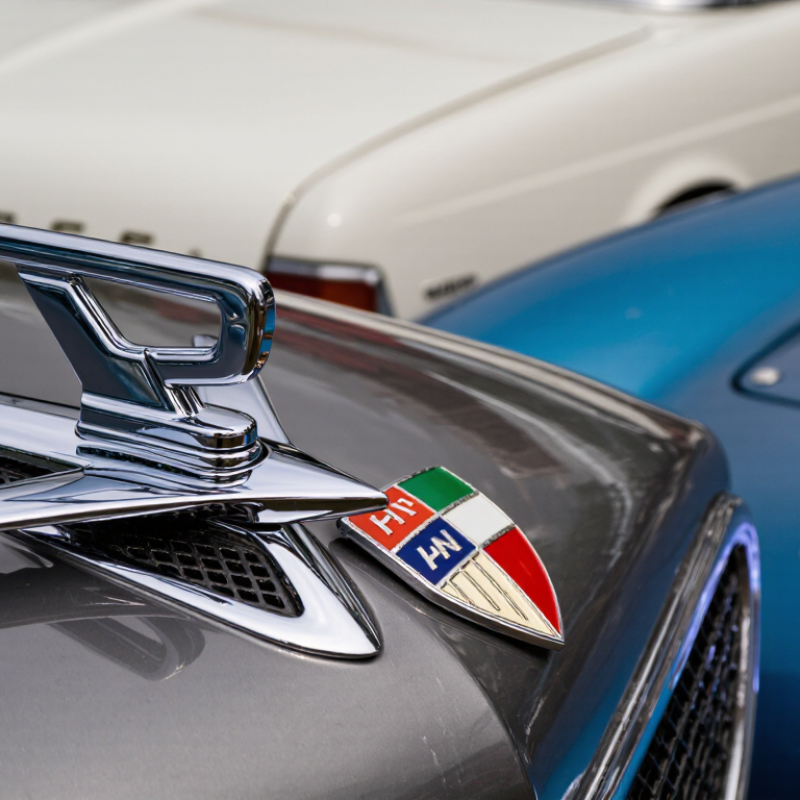
What a Car Emblem Is and What It Represents
A car emblem is a small identifying mark attached to a vehicle’s exterior or interior. It may be a raised metal badge on the grille, a flat symbol on the trunk, or lettering near a door. Up close, you can notice its edges, finish, and how sunlight catches its surface. Small detail, clear purpose.
An emblem represents identity and design, but it can also suggest a vehicle’s model, trim level, or engineering division. Shapes and colors often carry meaning: a wing may suggest movement, while a shield can imply protection or heritage. These associations are not universal, though. The same shape can mean different things to different people, so interpretation takes context.
Emblems are commonly made from metal, plastic, or coated materials, and some are illuminated. Their placement helps distinguish them from decorative badges or interior labels. A loose corner, faded finish, or mismatched adhesive may indicate wear or replacement, but it does not prove the vehicle’s history. I sometimes read too much into a badge; checking the vehicle’s documentation gives a more dependable picture. Some emblems are simply decoration.
How Car Emblems Are Designed and Made
A car emblem starts as a small drawing, but its design must work at a distance and up close. Designers consider the vehicle’s shape, available mounting space, and how light will fall across the surface. A raised edge may catch sunlight, while recessed details can collect dust. Simple shapes often stay readable when the car is moving. That sounds obvious, yet fine details are easy to overdo.
Once the artwork is approved, it is adapted for production. Metal emblems may be stamped or cast, then polished, plated, or coated. Plastic versions are commonly molded and may receive a painted or metallic-looking finish. The choice depends on appearance, weight, cost, and exposure to weather. Adhesive backing or mounting pins are added to secure the emblem to a body panel or grille. Small alignment errors matter. During inspection, makers check dimensions, finish consistency, sharp edges, and attachment strength. A surface can look flawless under workshop lights but show uneven color outdoors. That is a detail worth reconsidering. Proper cleaning and careful installation also help the finished emblem stay in place.
Common Types of Car Emblems
Car emblems come in several forms, and each serves a slightly different purpose. A grille emblem sits at the front, where airflow, road grit, and routine washing can wear its finish. These pieces are commonly molded from plastic or made from plated metal. Their shape may be raised, flat, or backed with a colored insert. Small details matter. A loose edge can collect dirt and make an otherwise clean front look neglected.
Model and trim badges usually appear on the trunk, liftgate, or front fenders. They identify a vehicle’s series or configuration, though exact placement varies by design. Some use individual letters; others use one compact plate. Hood ornaments are another type, mounted above the hood on certain vehicles. They are exposed to impacts and weather, so their mounts need careful inspection. A badge can be more decorative than informative, a distinction that is easy to overlook.
Wheel center-cap emblems sit at the hub and rotate with the wheel, making them noticeable in motion. Interior emblems may appear on steering wheels, dashboards, or door trim. Some newer designs use illuminated lettering, but replacement can be more complicated because wiring and fit must match. Adhesive-backed decals are simpler and usually sit on glass or painted panels. They can fade at the edges. When comparing types, check material, mounting method, and exposure to heat or water; appearance alone tells only part of the story.
Materials and Mounting Methods
Materials and Mounting Methods
Car emblems commonly use ABS plastic, stainless steel, aluminum, or zinc alloy. Plastic keeps weight low; metal can provide a crisp, solid feel. Finishes such as chrome plating or paint need to withstand sun, water, and road grit. The Aluminum Association and DuckerFrontier reported an average 459 pounds of aluminum per North American light vehicle in 2020, projecting 570 pounds by 2030. That figure covers the whole vehicle, not just emblem panels, but it highlights why installers should check the mounting surface rather than assume every panel is alike.
Most lightweight emblems use automotive-grade adhesive tape. It avoids drilling, but dirt, wax, cold temperatures, or a curved panel can weaken the bond. Clips, studs, and screws offer a more mechanical hold, though they require matching holes and careful corrosion protection. OICA recorded about 93.5 million vehicles produced worldwide in 2023; at that scale, consistent fit and repeatable installation matter. Still, a small emblem can be surprisingly fussy.
Tips: Clean and dry the panel, then test alignment with masking tape before bonding. Follow the adhesive’s temperature and curing instructions. Don’t rush it. If the emblem sits unevenly, the surface or backing may be the problem—not the installer alone.
How to Identify and Care for a Car Emblem
A car emblem is a small identifying badge attached to a vehicle’s grille, trunk, or wheel center. To identify one, note its location, shape, lettering, and finish. Raised metal pieces often feel heavier and cooler than molded plastic, though appearance alone can mislead. Look closely.
Check the back or edge when safe and accessible. Clips, screws, and adhesive pads are common attachment methods. Fading, bubbling, or a sharp color difference may suggest a replacement, but these clues are not proof. Compare the emblem’s dimensions and mounting points with reliable vehicle documentation. A phone photo in soft daylight can help you inspect fine details without guessing from memory.
Care starts with gentle cleaning. Rinse away loose grit, then use mild car-wash soap and a soft microfiber cloth. Avoid abrasive pads, strong solvents, and forceful scraping; they can dull a coating or lift an edge. Dry around the badge so water does not sit in seams. If it feels loose, do not pull it off casually: hidden clips can break, and old adhesive may leave residue. A careful cleaning may reveal wear rather than fix it. That can be disappointing, but it is useful information. For persistent corrosion or a damaged mount, ask a qualified vehicle technician to assess it.





 Newsletter