




A Water Irrigation Hose is a flexible tube designed to deliver water from a supply point to crops, lawns, gardens, or landscaped areas. It may look simple, but its performance depends on diameter, wall thickness, pressure rating, material, and connector quality. A hose that feels strong in the hand can still kink, leak, or lose pressure during daily use. Small details matter.
Dr. Richard G. Allen, a respected irrigation scientist, has stated, “Good irrigation is not simply applying more water; it is applying the right amount at the right time.” This principle explains why selecting a suitable Water Irrigation Hose requires more than checking its length. A vegetable bed may need gentle, controlled flow, while a larger field may require stronger pressure and longer coverage. A lightweight hose can be convenient, but it may wear quickly on rough ground. A thicker hose can last longer, though it may be heavier and less flexible.
The definition is useful, but incomplete. Real performance changes with heat, sunlight, soil contact, water pressure, and storage habits. I have seen hoses fail near sharp edges and poorly fitted couplings, even when the hose itself appeared reliable. For that reason, this guide examines how irrigation hoses work, which materials suit different conditions, and what practical signs reveal quality. The best choice is not always the most expensive one. It is the hose that delivers consistent water with fewer surprises.
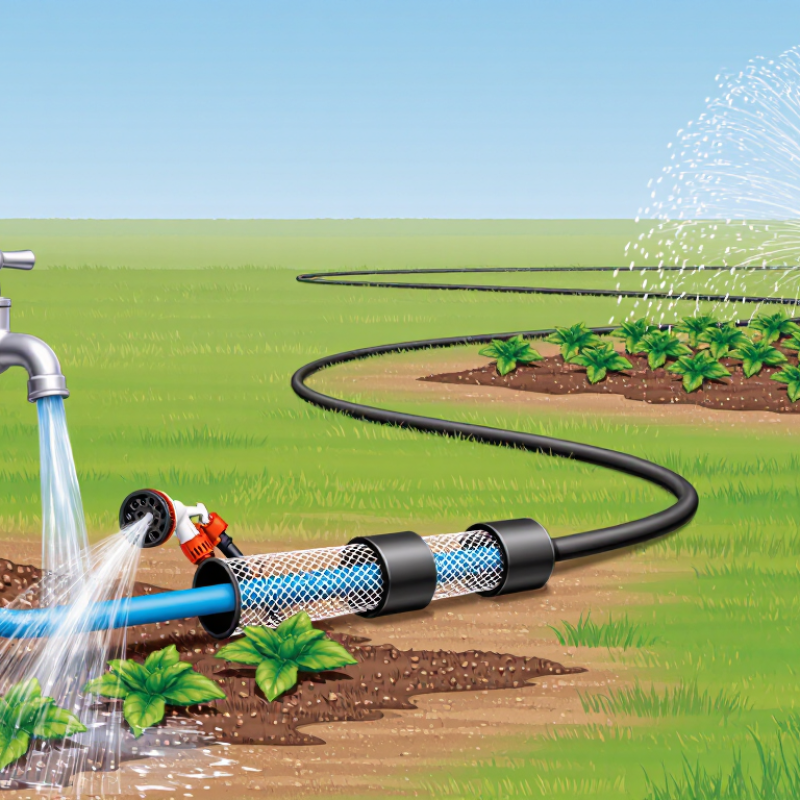
What Is a Water Irrigation Hose?
A water irrigation hose is a flexible tube that carries water from a tap, pump, tank, or irrigation line to growing areas. Its purpose is direct and practical: deliver controlled water near plant roots. Common designs include smooth hoses, perforated soaker hoses, and reinforced lines for higher pressure. The correct choice depends on hose diameter, water pressure, length, soil type, and plant spacing. A long, narrow hose may lose pressure before reaching distant beds. That detail is easy to overlook.
The definition is simple, but the water-saving purpose matters. The United Nations World Water Development Report identifies agriculture as using roughly 70% of global freshwater withdrawals. In residential settings, the U.S. Environmental Protection Agency reports that outdoor water use represents more than 30% of household consumption in many areas. An irrigation hose can reduce waste by placing water close to roots, especially when it is paired with a timer or pressure regulator. However, a hose is not automatically efficient. Leaks, excessive pressure, and uneven perforations can still waste water. Field installers often check flow at both ends, because the outlet rate may differ noticeably. The hose material also matters. Sun exposure can make some tubing brittle, while repeated bending can create hidden kinks. The term “irrigation hose” is not perfectly standardized, so specifications should be checked before installation. Something may look suitable and still perform poorly.

A water irrigation hose is a flexible tube used to transport water from a supply point to plants, soil, or other irrigation equipment. Hose diameter affects potential water volume: a larger internal area can carry more water under the same pressure, although actual flow also depends on hose length, pressure, fittings, and elevation.
Chart explanation: The values represent the calculated internal cross-sectional area of common nominal hose diameters. They are based on the circle-area formula and illustrate why larger hoses are generally suitable for higher-volume irrigation applications.
A water irrigation hose is a flexible tube that carries water from a supply point to crops, beds, or containers. Its construction determines pressure tolerance, flexibility, and service life. Most hoses use an inner tube, reinforcement layer, and outer cover. The inner tube contacts water and should resist cracking, swelling, and chemical exposure. Reinforcement usually consists of woven fibers or spiral threads. It helps the hose keep its shape under pressure. The outer cover protects against sunlight, abrasion, soil, and repeated dragging. Not all covers perform equally well.
Fittings connect the hose to valves, filters, sprinklers, or drip lines. Common materials include corrosion-resistant metal and durable polymers. A clamp, seal, or threaded connector prevents leakage at each joint. In field use, I have found that connectors often fail before the hose does. Kinks are another weak point. They restrict flow and can damage reinforcement over time. A hose may look sound outside, yet feel soft near a stressed fitting. That detail deserves attention.
Tips: Check the hose when it is pressurized. Small leaks become easier to locate. Choose a diameter that matches the required flow, not just the available tap. Rinse muddy water from connectors before storage. Keep the hose shaded when possible. I once ignored a shallow kink, and the reduced flow affected an entire planting row. That mistake was avoidable.
A water irrigation hose moves water from a tap, pump, or storage tank to plants. Its inner tube carries the water. Outer layers resist pressure, sunlight, and bending. Some hoses release water through small holes or built-in emitters. Others connect to sprinklers or open ends.
Water begins moving when pressure pushes it through the hose. Higher pressure can increase flow, but too much pressure may damage fittings or split weak sections. Connectors create a sealed path between the water source and each hose section.
In drip systems, narrow outlets slow the flow and place water near the roots. This reduces surface runoff, especially on loose soil.
Small details affect performance. A sharp bend can restrict flow, leaving distant plants dry. Dirt can block tiny outlets, so a filter and occasional flushing are useful. I once assumed equal hose lengths would deliver equal water. They did not. Elevation, pressure loss, and loose connections changed the results. A simple pressure check can reveal this problem before plants show stress. Examine the hose for soft spots, cracks, and leaking joints. Letting it rest in strong sunlight may shorten its service life. Yet shade alone cannot fix poor installation. The layout still needs gentle curves, secure anchors, and access for inspection.
A water irrigation hose delivers water directly to plants, planting beds, or crop rows. Its design controls where water leaves the line. This reduces waste compared with broad hand watering. The right hose depends on soil, pressure, plant spacing, and sunlight.
Soaker hoses release water through tiny openings along their walls. They work well beneath mulch around vegetables, shrubs, and flower borders. Porous hoses provide gentle, continuous moisture across longer sections. However, uneven pressure can make the far end wetter or drier.
I once installed a long soaker hose without checking flow. The plants near the tap received too much water.
Drip irrigation hoses use built-in emitters at measured intervals. They suit rows of tomatoes, hedges, and container groups. Each emitter delivers a small, controlled amount near the root zone. A filter helps prevent sediment from blocking these narrow outlets. A pressure regulator may also protect the fittings and emitters.
Sprinkler hoses spray water through small openings across the surface. They cover wider areas, including lawns and newly seeded beds. Their performance changes in wind and strong sunlight. Lay-flat hoses are useful for temporary irrigation because they store easily after draining. They need careful positioning, since sharp folds can restrict water flow.
Inspect connections regularly. Small leaks often appear before visible plant stress.
A water irrigation hose delivers water from a source to plants, beds, or landscape zones. Selection starts with flow, distance, pressure, and exposure conditions. Choose a diameter that supports the required flow without excessive pressure loss. The hose should also exceed the system’s maximum working pressure. This detail is often overlooked. The U.S. Environmental Protection Agency’s WaterSense program estimates that outdoor household use represents nearly 30% of residential water consumption, while inefficient watering can waste much of it through evaporation and runoff. A suitable hose helps reduce those losses, but it cannot correct poor scheduling.
Installation requires careful routing. Lay the hose on stable ground, avoid sharp bends, and keep connectors away from vehicle paths. Install a filter when water contains sediment. Flush the line before attaching emitters. Check each joint while the system operates; a small leak can create a muddy patch within hours. The FAO reports that agriculture accounts for roughly 70% of global freshwater withdrawals, so even small irrigation improvements deserve attention. Yet perfect efficiency is unrealistic. Sun, soil variation, and changing pressure still affect performance.
Tips: Inspect washers, connectors, and surface cracks every month. Remove kinks immediately. Drain the hose before freezing weather. Store it loosely, not in tight coils. During one practical inspection, a hidden pinhole wasted water beside a healthy flower bed. It looked minor. It was not.
Newsletter SignupUpcoming events, promo offers, member exclusives and more.
Golf Fanatics is a Chrysalis Enterprises Company owned by a group of like-minded individuals who share a common passion and affinity for golf, investing in successful Small-Medium-Enterprises, creating rewarding employment opportunities and being good industry participants and corporate citizens.
Monday
Tuesday
Wednesday
Thursday
Friday
Saturday
Sunday
9 a.m. – 10 p.m.
8 a.m. – 10 p.m.
8 a.m. – 10 p.m.
8 a.m. – 10 p.m.
8 a.m. – 11 p.m.
8 a.m. – 11 p.m.
8 a.m. – 9 p.m.
Copyright © 2025 · Golf Fanatics is a division of Chrysalis Golf Ventures Inc.
7100 15th St SE, Calgary AB
This site is protected by reCAPTCHA and the Google Privacy Policy and Terms of Service apply.

Need help? Call our support 24/7

Just a few things before you book…
While Toptracer Range technology and our automated ball dispensers are 99% reliable, there are rare instances when they do not function properly, especially during periods of inclement weather.
Please note that we do not guarantee the reliability of these services during any booking and will not provide you with a refund or credit if they do not function properly during your booking, therefore booking our services is fully at your discretion.
By booking our services, you acknowledge full responsibility for the cost of any intentional or unintentional damages to any Golf Fanatics or neighboring property and equipment caused by you or your guests during your booking.
You and your guests hereby agree to indemnify Golf Fanatics from any liabilities associated with any personal injury incurred by you or your guests during your booking.


