



Finding the right golf club fitting Calgary service can change how confidently you approach every shot. A well-fitted club should match your swing, body measurements, playing goals, and current skill level. It should not simply follow the newest equipment trend.
Calgary golfers face practical challenges, including long winters, indoor practice sessions, and changing course conditions. A reputable fitter should explain how these factors affect shaft choice, club length, loft, lie angle, and grip size. You may hit several seven-irons while a launch monitor records ball speed, launch angle, spin, carry distance, and dispersion. The numbers matter, but your feedback matters too. A club that performs well but feels uncomfortable may not stay in your bag.
Ask about the fitter’s experience, equipment brands, fitting process, and after-fitting support. Professional guidance should be clear, patient, and based on measurable evidence. It should also include honest limitations. No fitting method is flawless. Your swing may change after lessons, injury recovery, or regular practice. That possibility deserves discussion.
A useful fitting session feels practical rather than pressured. You should have time to compare clubs, ask difficult questions, and understand why one option suits you better. Some golfers may need a complete set assessment, while others only need a driver adjustment or new wedges. The best choice depends on your real game, not a sales script. This guide explores how to evaluate local providers and make a confident decision without overlooking the small details that influence performance.
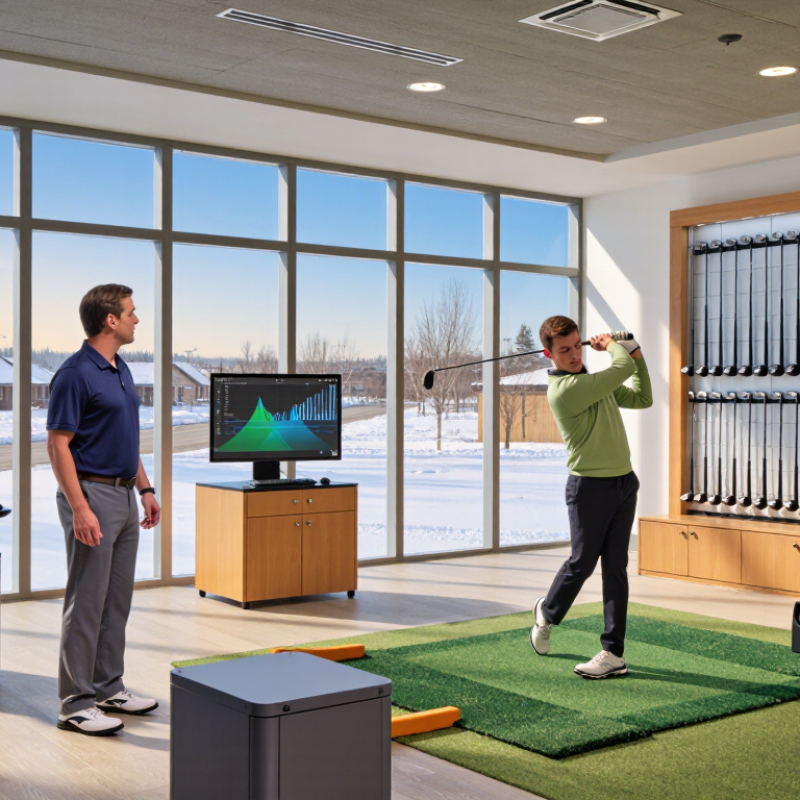
Finding the best golf club fitting in Calgary starts with defining what you need. Your handicap reveals patterns, but not your entire ability. A high handicapper may need forgiveness, yet poor contact can also come from setup or timing. A lower handicapper may prioritize shot shaping, distance control, or consistent gapping. Be honest about missed shots. They matter.
Swing Speed provides a useful starting point for shaft flex, club length, and loft. It should not decide everything. Two golfers can share similar speed but release the club differently. A qualified fitter should measure speed, launch, spin, strike location, and dispersion. Ask to see several swings, not only your best one. Calgary’s changing temperatures can affect carry distance, so indoor numbers require careful interpretation. Outdoor validation helps when available.
Your playing goals should guide the final recommendation. Tell the fitter whether you want higher launches, tighter misses, reliable wedges, or extra distance. Bring your current clubs and explain where confidence disappears on the course. I have seen golfers choose impressive distance numbers, then struggle with control. I have made that mistake too. A fitting is a testing process, not a performance. Compare results, record the compromises, and choose clubs for your actual game. Recheck the fit after lessons or major swing changes.
Finding the best golf club fitting in Calgary starts with the fitter, not the equipment. Look for recognized professional certifications, documented fitting experience, and clear testing procedures. A qualified fitter should measure posture, swing speed, launch angle, ball speed, spin, and strike location. They should also explain why each change matters. The USGA and R&A Distance Insights Report (2021) recorded more than 20 yards of average driving-distance growth on major professional tours since 1980. Your fitting should therefore examine distance and control, not distance alone.
Compare fitters by the brands and club categories they can access, but avoid sessions built around one sales target. Calgary golfers may need different setups for cold spring air, firm summer turf, and indoor practice conditions. A radar-and-camera launch monitor can reveal carry distance, descent angle, face-to-path, and strike consistency. These numbers are useful, but imperfect. A simulator reading can never fully reproduce wind, uneven lies, or tournament pressure. Ask whether the fitter verifies results outdoors when practical. The National Golf Foundation’s 2023 industry report also showed continued participation growth, meaning more golfers are seeking measurable improvement rather than simple replacement clubs.
Tips: Ask for a printed baseline and final comparison. Bring your current clubs. Hit familiar shots before testing. Numbers need context. If the fitter cannot explain an unusual result, pause before buying. I would also request a short follow-up session, because early excitement can hide poor long-term gapping. A fitting should leave you informed, not merely impressed.
A practical comparison framework based on certification, fitting options, launch-monitor technology, and fitting-process quality.
These percentages represent a suggested evaluation weighting rather than ratings for individual businesses. Certification helps confirm technical training, a broad range of fitting options improves club selection, TrackMan or equivalent launch-monitor technology supports measurable analysis, and a structured fitting process helps turn data into reliable recommendations. Always confirm current qualifications, available equipment, and technology directly with the fitter.
Finding the best golf club fitting in Calgary requires more than hitting a few impressive shots.
A qualified fitter should examine over 30 launch-monitor metrics during every meaningful swing. Launch, spin, ball speed, carry distance, and dispersion reveal the club’s real performance. Club path, face angle, attack angle, dynamic loft, smash factor, apex height, and descent angle explain why the ball behaves that way.
Numbers matter. A fitter may notice that your ball speed looks strong, but your spin rate is too low for reliable stopping power. Another player may launch the ball well yet create excessive side dispersion through an inconsistent face angle. I once focused too heavily on distance during a fitting. The longer club produced exciting results, but its left-to-right pattern was difficult to control. That changed everything. Calgary conditions also deserve attention. Cold air, changing wind, and different course elevations can influence carry and rollout. A dependable fitting should compare repeated shots, not one perfect strike. Ask to see the shot pattern, including the worst reasonable misses.
Still, fitting is not perfect. Your swing may change under pressure, and indoor results may not fully match outdoor play. A careful fitter should explain those limits, adjust one variable at a time, and let you test the club with realistic targets. Reliable decisions come from consistent evidence, not a single fast swing.
Finding the best golf club fitting in Calgary starts with reliable swing data, not a quick visual assessment. A qualified fitter should watch several swings and record club speed, ball speed, launch angle, spin, attack angle, and strike location. Indoor sessions can help, but outdoor testing may reveal how wind and turf affect your decisions. Numbers matter.
Shaft flex should match your delivery, tempo, and contact pattern. Faster speed does not automatically require an extra-stiff shaft. A player with a smooth transition may need different support than a player with the same speed and a sharp change of direction. Lie angle deserves equal attention. If the sole strikes the ground unevenly, the ball can start left or right of target. Use impact tape or a lie board, then confirm the result through actual ball flight.
Loft controls launch, spin, and distance gaps between clubs. Check the full set, not only the strongest club. Length also affects posture, strike quality, and face control. Longer is not always better. During a fitting, hit shots from your normal stance and make several swings after fatigue appears. That detail is easy to ignore. I once trusted a single excellent shot too quickly, and it distorted the recommendation. A stronger process compares patterns, tests small adjustments, and leaves room to question the first answer.
How to Find the Best Golf Club Fitting in Calgary?
A reliable Calgary fitting should check legality, not only launch numbers. The USGA and R&A Rules of Golf, Rule 4.1b(1), allow a player to carry no more than 14 clubs during a round. Ask the fitter to count your current clubs, including replacements stored in the bag. That small check prevents an avoidable penalty. Each club should also meet governing equipment standards for length, head size, grooves, spring-like effect, and adjustability. The USGA’s public conforming-club resources can help verify doubtful equipment.
Do not rely on claims alone. Request measured loft, lie angle, shaft length, and swing weight for every selected club. A fitter should explain how those specifications affect your launch, dispersion, and gapping. Golf Canada’s 2023 National Golf Participation Study reported 6.1 million Canadian golfers, showing how widely equipment decisions affect players nationwide. During testing, hit shots from realistic Calgary conditions, including uneven lies when possible. Indoor numbers can look perfect.
They are not the course.
A professional fitting should document the equipment settings and identify any nonconforming club clearly. I would also retest after several rounds, because swing changes and cold weather can alter results. My own preference would be to trust repeatable dispersion over one impressive shot. That approach is less exciting, but often more honest.
| Fitting Dimension | What to Measure or Review | Useful Fitting Data | USGA Rules and Verification | Recommended Evidence |
|---|---|---|---|---|
| Player Profile | Handicap, typical miss, ball flight, playing goals, injury considerations, and usual course conditions in Calgary. | At least 10–15 representative shots per club category, rather than relying on one unusually good swing. | Player characteristics do not change equipment legality, but they determine whether the selected specifications are appropriate and controllable. | Written player profile and a record of the fitting objectives. |
| Club Count | Count every club intended to be carried, including the putter. | Maximum: 14 clubs during a round. A practical set commonly includes a driver, fairway or utility clubs, irons, wedges, and a putter. | Rule 4.1b permits a player to start a round with no more than 14 clubs. The restriction applies during the round, not merely during the fitting. | Final club inventory with each club listed by type and loft. |
| Loft Gapping | Measure actual lofts and compare carry distances between consecutive clubs. | Consistent distance gaps are more important than identical loft intervals; many players aim for approximately 10–15 yards between scoring clubs, subject to swing speed. | Loft is generally not restricted by a single universal USGA number, but the club must otherwise conform to the Equipment Rules. | Loft measurement report and launch-monitor carry-distance chart. |
| Lie Angle | Check static and dynamic lie, face delivery, start direction, and turf interaction. | Compare starting direction, face angle, strike location, and lie-board or impact-tape results where appropriate. | Lie angle must not be adjusted in a way that makes the club non-conforming under the applicable Equipment Rules. | Before-and-after lie measurements, preferably taken with calibrated equipment. |
| Club Length | Measure finished club length using the recognized club-measurement method, especially after trimming or extending a shaft. | Longer clubs may increase potential speed but can affect center contact, dispersion, and control. | The Equipment Rules specify permitted club-length limits and measurement procedures. The finished club should be checked after all modifications. | Finished-length measurement recorded on the fitting specification sheet. |
| Shaft Flex and Weight | Evaluate shaft weight, flex profile, torque, balance point, and how consistently the player loads the shaft. | Compare club speed, ball speed, launch, spin, dispersion, and strike consistency across several shaft options. | Shaft labels and flex classifications are not standardized across all manufacturers; legality depends on the completed club meeting the Equipment Rules. | Measured shaft and finished-club specifications, not only the printed flex label. |
| Swing Weight and Total Weight | Measure swing weight, total mass, grip weight, and shaft balance for the completed club. | A consistent feel throughout the set may improve tempo and strike quality; the best value depends on the player, not a universal number. | Weight distribution must not include features that violate the rules on external attachments or adjustable features. | Swing-weight and total-weight readings for every selected club. |
| Driver and Wood Face | Check face condition, loft setting, impact pattern, launch, spin, and directional dispersion. | Review ball speed, launch angle, spin rate, carry, total distance, and left-right dispersion using repeated shots. | Confirm that the exact head model and adjustable configuration are listed as conforming in the current official equipment database when required for competition. | Exact head identification, loft setting, and conformity record. |
| Grooves and Clubface | Inspect groove shape, spacing, sharpness, face wear, and any damage caused by use or modification. | Worn or damaged grooves can reduce predictable spin and control, particularly in wet conditions. | Groove dimensions, edge sharpness, face markings, and other clubface features are subject to detailed Equipment Rules; competition requirements may vary by applicable condition of competition. | Visual inspection plus conformity verification for clubs intended for tournament play. |
| Grip and Grip Size | Measure grip diameter, taper, texture, alignment, and condition; account for glove size and hand comfort. | Grip size should support neutral control without excessive tension; a worn or slippery grip should be replaced. | The grip must comply with the Equipment Rules, including restrictions on shape and hand placement features. | Grip model, installed size, alignment, and replacement date recorded for each club. |
| Adjustable Components | Document hosel settings, movable weights, interchangeable shafts, and the setting used during play. | A fitting should compare only settings that the player can reproduce and maintain consistently. | Adjustable features must be permitted by the applicable Equipment Rules and must not be changed during a round except where the rules allow it. | Photograph or record the approved playing configuration. |
| Calgary Testing Conditions | Record temperature, wind, elevation, humidity, indoor or outdoor conditions, and range-ball type. | Calgary’s elevation and weather can affect carry and ball flight, so compare clubs using consistent conditions and normalized data where available. | Playing conditions do not make a non-conforming club legal; equipment conformity must be assessed separately from performance data. | Launch-monitor settings and environmental conditions included in the final report. |
| Final Compliance Review | Confirm the delivered clubs match the fitted specifications and that no post-fitting alteration changed the result. | Compare the final build against the fitting sheet: club count, loft, lie, length, shaft, grip, swing weight, and adjustable settings. | Use the current USGA/R&A Equipment Rules and official conformity resources for clubs intended for competition. Rules and conditions of competition should be checked before play. | Signed final specification sheet and conformity check dated after assembly. |
Note: Performance targets are fitting guidelines rather than universal requirements. Competition legality should always be confirmed against the current applicable USGA/R&A Rules of Golf, Equipment Rules, and conditions of competition.
Newsletter SignupUpcoming events, promo offers, member exclusives and more.
Golf Fanatics is a Chrysalis Enterprises Company owned by a group of like-minded individuals who share a common passion and affinity for golf, investing in successful Small-Medium-Enterprises, creating rewarding employment opportunities and being good industry participants and corporate citizens.
Monday
Tuesday
Wednesday
Thursday
Friday
Saturday
Sunday
9 a.m. – 10 p.m.
8 a.m. – 10 p.m.
8 a.m. – 10 p.m.
8 a.m. – 10 p.m.
8 a.m. – 11 p.m.
8 a.m. – 11 p.m.
8 a.m. – 9 p.m.
Copyright © 2025 · Golf Fanatics is a division of Chrysalis Golf Ventures Inc.
7100 15th St SE, Calgary AB
This site is protected by reCAPTCHA and the Google Privacy Policy and Terms of Service apply.

Need help? Call our support 24/7

Just a few things before you book…
While Toptracer Range technology and our automated ball dispensers are 99% reliable, there are rare instances when they do not function properly, especially during periods of inclement weather.
Please note that we do not guarantee the reliability of these services during any booking and will not provide you with a refund or credit if they do not function properly during your booking, therefore booking our services is fully at your discretion.
By booking our services, you acknowledge full responsibility for the cost of any intentional or unintentional damages to any Golf Fanatics or neighboring property and equipment caused by you or your guests during your booking.
You and your guests hereby agree to indemnify Golf Fanatics from any liabilities associated with any personal injury incurred by you or your guests during your booking.