




China has become a practical sourcing base for golf putting equipment, including putters, indoor mats, training aids, and commercial putting systems. Its manufacturing network combines metal machining, composite molding, synthetic turf production, electronics, and packaging. This combination matters to global buyers seeking consistent quality and flexible customization.
The R&A’s Global Golf Participation Report 2023 recorded approximately 66.6 million golfers across surveyed markets outside the United States and Mexico. The report also highlighted continuing participation growth in several regions. Meanwhile, the National Golf Foundation’s 2024 Golf Participation Report identified more than 28 million on-course golfers in the United States during 2023. These figures suggest sustained demand for practice products, not only traditional club sales. However, participation data does not directly measure putting equipment demand. That limitation deserves attention.
Quality remains the real purchasing test. A reliable Chinese supplier should provide material specifications, sample records, production photographs, inspection procedures, and traceable packaging details. Buyers should examine turf speed consistency, mat rebound, putter face tolerances, adhesive durability, and carton protection. Small defects become obvious under bright indoor lighting. They can also affect retail reviews.
This guide examines China’s leading golf putting suppliers through manufacturing experience, product specialization, export capability, customization support, and quality-control evidence. It also considers information from The R&A, the NGF, and international trade databases. Supplier rankings are never perfect. Factory capacity can change quickly. Independent verification remains essential before placing a large order.
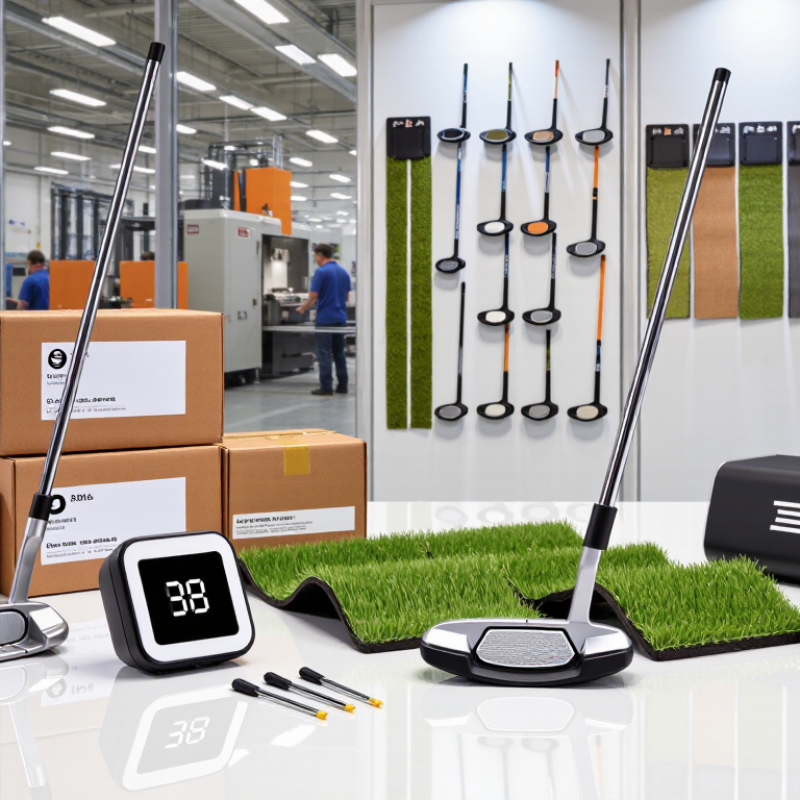
Global buyers are seeking golf putting products that feel authentic, durable, and easy to install. Demand is rising from home practice rooms, golf clubs, hotels, and training centers. Many buyers now compare surface speed, backing stability, hole accuracy, packaging, and delivery reliability before discussing price.
The regulation-style golf hole is 4.25 inches in diameter. That measurement matters. A hole that is slightly narrow can make practice feel unrealistically difficult. A loose cut may damage the putting experience and reduce product credibility. During supplier checks, buyers should request dimensional samples, surface photographs, and test reports. Roll a ball from several distances. Small defects often appear near the edges.
Suppliers in China increasingly offer modular putting greens, portable mats, replaceable cups, and compact practice systems. Buyers also ask about low-odor materials, easier cleaning, and packaging that prevents creases during shipping. These trends are practical, not merely fashionable. Still, some product claims need more evidence. A “professional” surface does not guarantee consistent ball speed. I have seen attractive samples fail after repeated use. Clear specifications, production inspections, and honest communication remain more valuable than polished sales language. Repair instructions should be included, too. Mistakes happen. A dependable supplier shows how they handle them.
China Top Golf Putting Suppliers for Global Buyers?
China’s putting supplier landscape is broader than a factory list. OEM capacity ranges from small workshops to integrated plants with mold, injection, assembly, and packaging lines. Some suppliers produce putter heads, training aids, cups, flags, and complete practice sets. Others only manage final assembly. This difference affects lead time, tooling ownership, and minimum order quantities.
Factory visits can reveal practical details. Check surface finishing under bright light. Test alignment features repeatedly. Measure shaft fit, grip pressure, and packaging strength. A sample may look excellent, while a later batch shows uneven paint or loose components. That happens. Written inspection standards reduce the risk, but they never replace production checks.
Certifications require careful reading. ISO 9001 can support process control, but it does not guarantee perfect putting equipment. Material declarations, test reports, and product-specific compliance documents should match the actual model. Ask for issuing bodies, test dates, and factory addresses. Export reach also matters. Experienced suppliers usually understand carton markings, pallet loading, customs documents, and destination requirements. They may ship through major coastal ports, but inland transport can change delivery costs. Confirm Incoterms, sample approval, spare parts, and after-sales response before placing an order. A low quotation is not always efficient. Sometimes, the cheapest unit creates expensive revisions.
| Supplier Profile | Typical Product Scope | OEM / Customization Capacity | Common Materials and Processes | Typical MOQ Range | Typical Production Lead Time | Common Quality and Compliance Documentation | Typical Export Reach | Best Fit for Buyers |
|---|---|---|---|---|---|---|---|---|
| Integrated Sporting-Goods Manufacturer | Complete putters, practice putting mats, alignment aids, headcovers, and packaged golf training sets. | High. Usually able to support custom head shapes, finishes, grips, packaging, logos, and assembled product programs. | Stainless steel, aluminum, zinc alloys, thermoplastic components, synthetic leather, EVA, polyester, CNC machining, casting, polishing, coating, and assembly. | 300–1,000 units per model | 45–75 days after sample approval | ISO 9001 may be available; buyers commonly request material declarations, inspection reports, packaging tests, and product-specific test reports. | North America, Western Europe, Australia, Japan, South Korea, and Southeast Asia. | Retailers, distributors, golf academies, and private-label programs requiring several product categories. |
| Golf-Accessory OEM Factory | Putting mats, return systems, alignment tools, stroke trainers, ball holders, practice cups, and storage accessories. | Medium to high. Stronger in surface graphics, dimensions, packaging, colorways, and accessory combinations than in complex metal-head engineering. | Nylon, polyester, PVC, rubber, EVA foam, ABS, polypropylene, printed textiles, laser cutting, sewing, heat sealing, and injection molding. | 500–2,000 units per SKU | 30–60 days after artwork and sample confirmation | ISO 9001 may be available; REACH and RoHS declarations are frequently requested for applicable materials and components. | United States, Canada, the United Kingdom, the European Union, Australia, and online-commerce markets worldwide. | E-commerce sellers, golf-training brands, promotional distributors, and buyers prioritizing packaging flexibility. |
| Precision Metal and CNC Supplier | Milled or cast putter heads, necks, weights, sole plates, hosel components, and replacement metal parts. | Very high for engineering changes, tolerances, sole geometry, cavity designs, weighting systems, and surface finishes. | Stainless steel, carbon steel, aluminum, tungsten-alloy weights, CNC milling, turning, casting, grinding, bead blasting, PVD, plating, and engraving. | 50–300 units for prototypes or small batches; 300–1,000 units for production | 35–70 days, depending on tooling and surface treatment | ISO 9001 may be available; dimensional inspection records, alloy certificates, coating specifications, and first-article inspection reports are commonly used. | Europe, North America, Japan, South Korea, Taiwan, and specialist golf-equipment markets. | Technical golf-equipment developers and buyers needing tight dimensional control or low-volume engineering runs. |
| Training-Aid and Practice-Equipment Specialist | Indoor putting mats, portable greens, alignment gates, ball-return devices, practice cups, and home-use training kits. | Medium. Custom dimensions, graphics, target layouts, accessory bundles, and retail packaging are commonly supported. | Nylon or polyester turf, rubber backing, MDF or plastic bases, aluminum rails, molded plastic parts, printing, die cutting, lamination, and assembly. | 200–1,000 units per design | 25–55 days after sample approval | Factory quality-management records, material declarations, carton-drop testing, and applicable chemical-compliance documentation may be provided. | North America, Europe, Australia, New Zealand, the Middle East, and Southeast Asia. | Home-training suppliers, sporting-goods retailers, corporate-gifting programs, and golf facilities. |
| Private-Label Assembly and Packaging Supplier | Standard putters or putting accessories combined with customized grips, headcovers, instruction cards, cartons, and display packaging. | Medium. Best suited to cost-effective customization using existing tooling and standardized component platforms. | Purchased metal or plastic components, molded grips, synthetic leather, paperboard, corrugated cartons, screen printing, pad printing, and final assembly. | 300–2,000 units per SKU | 25–50 days after component confirmation | Supplier audit reports, incoming-material inspection records, packaging specifications, and third-party inspection reports are commonly requested. | Global parcel and container markets, including North America, Europe, Latin America, the Middle East, and Asia-Pacific. | New brands, promotional buyers, distributors, and importers seeking lower development cost and faster market entry. |
| Large-Volume Sports-Equipment Producer | Standardized putters, practice sets, golf accessories, promotional bundles, and seasonal retail programs. | Medium. Strong production capacity and purchasing leverage, with customization generally based on approved platforms. | Die-cast or investment-cast metal, stainless steel, molded polymers, rubber, textiles, automated polishing, coating, printing, and high-volume assembly. | 1,000–5,000+ units per model | 45–90 days, depending on production scheduling | ISO 9001 may be available; social-compliance audits, factory inspection reports, restricted-substance declarations, and packaging tests are often requested by international buyers. | North America, the European Union, the United Kingdom, Japan, Australia, and major sporting-goods distribution networks. | National retailers, chain stores, large distributors, and buyers requiring stable replenishment volumes. |
For global buyers comparing golf putters, specifications matter more than polished catalog photos.
Loft controls how the ball leaves the face. Too little loft may make the ball skid, while excessive loft can create a small hop. Test several loft options on real greens, not only indoor mats. A reliable supplier should provide measured loft and lie-angle data for each production batch.
Lie angle affects aim and face delivery.
A putter sitting too upright may send the ball left for some players. A flatter head can create the opposite error. Head weight also changes distance control. Heavier heads often feel steadier on slow greens, while lighter heads may offer quicker feedback.
Ask for the complete head weight, tolerance range, and shaft length. Small differences can become visible during a two-meter putt.
MOI data shows resistance to twisting when impact misses the center.
Higher MOI can protect direction, but it cannot repair poor alignment or inconsistent speed. I once rated a model too highly because its MOI looked impressive on paper. On a firm green, the face still felt less responsive than expected.
Buyers should request the testing method, impact location, and measurement tolerance.
Sample inspection is essential. Check loft, lie, weight, face flatness, finish quality, and packaging consistency.
Suppliers with clear reports, repeatable sampling, and practical fitting support are easier to trust. Numbers help, but hands-on testing remains necessary.
China Top Golf Putting Suppliers for Global Buyers?
A reliable putting green starts with measured Stimp speed, not a glossy product photo. The USGA Stimpmeter guidance treats readings near 8–10 feet as common for recreational play, while tournament surfaces often exceed 11 feet. Buyers should request test results from several points, not one center-line reading. Uneven speed is frustrating.
Surface material changes both feel and service life. Polypropylene fibers usually offer a firm, economical roll, while nylon can provide stronger resilience and sharper ball response. Polyethylene may create a softer, more natural appearance. Pile height, backing density, and seam quality matter equally. The Sports Turf Managers Association emphasizes routine inspection, drainage, and surface maintenance in synthetic turf management guidance.
Durability needs measurable evidence. Ask suppliers for UV-exposure results, abrasion testing, dimensional stability data, and backing tensile strength. ASTM-based testing is useful, but buyers should confirm the exact test method and sample size. A 2024 report from the Synthetic Turf Council highlights recycling and end-of-life planning as growing procurement concerns. That matters for large installations.
Training aids should also reflect real practice. Alignment guides, distance markers, and variable-slope modules can improve feedback. However, excessive targets may distract beginners. In my experience, a simple three-zone design often produces better repetition than a crowded layout. Factory samples can still mislead; warehouse lighting rarely matches outdoor use. Request a rolled sample, test it with the intended balls, and record speed after repeated use.
Indicative Stimp speed ranges and typical service-life ranges for commonly used putting surfaces and training aids.
Nylon systems generally deliver the fastest and most consistent roll, while polypropylene offers a balance between performance and cost. Polyester carpet mats are suitable for indoor training but typically have a shorter service life. Stimp speeds are shown in feet, and durability figures represent common expected service-life ranges under normal use; climate, installation quality, maintenance, traffic, and storage conditions can significantly affect actual results.
Supplier due diligence should begin with production evidence, not attractive photographs. Request the MOQ for each model, material option, color, and custom package. A low MOQ may hide higher unit pricing or limited quality control. Ask for a written lead time, including sample approval, tooling, production, and inspection. Confirm whether weekends, holidays, and raw material shortages affect the schedule. Ask for evidence.
Quality control needs measurable checkpoints. Review incoming material records, in-process inspection reports, and final packing standards. For putting products, check surface consistency, dimensional accuracy, alignment features, grip attachment, and packaging protection. Request a sample from normal production, not only a carefully selected showroom unit. Record defects and agree on acceptable limits before placing an order. Numbers can mislead.
Total cost includes more than the factory quotation. Add tooling, sampling, packaging, inland transport, freight, duties, inspection, payment fees, and expected defect losses. Compare landed cost per usable unit, not simply price per piece. One practical weakness is relying on supplier promises without testing a repeat order. A second order may reveal slower output or inconsistent finishing. That gap matters. Keep purchase terms, inspection rights, replacement procedures, and delivery milestones in writing. Suppliers that answer clearly are easier to manage when plans change.
Newsletter SignupUpcoming events, promo offers, member exclusives and more.
Golf Fanatics is a Chrysalis Enterprises Company owned by a group of like-minded individuals who share a common passion and affinity for golf, investing in successful Small-Medium-Enterprises, creating rewarding employment opportunities and being good industry participants and corporate citizens.
Monday
Tuesday
Wednesday
Thursday
Friday
Saturday
Sunday
9 a.m. – 10 p.m.
8 a.m. – 10 p.m.
8 a.m. – 10 p.m.
8 a.m. – 10 p.m.
8 a.m. – 11 p.m.
8 a.m. – 11 p.m.
8 a.m. – 9 p.m.
Copyright © 2025 · Golf Fanatics is a division of Chrysalis Golf Ventures Inc.
7100 15th St SE, Calgary AB
This site is protected by reCAPTCHA and the Google Privacy Policy and Terms of Service apply.

Need help? Call our support 24/7

Just a few things before you book…
While Toptracer Range technology and our automated ball dispensers are 99% reliable, there are rare instances when they do not function properly, especially during periods of inclement weather.
Please note that we do not guarantee the reliability of these services during any booking and will not provide you with a refund or credit if they do not function properly during your booking, therefore booking our services is fully at your discretion.
By booking our services, you acknowledge full responsibility for the cost of any intentional or unintentional damages to any Golf Fanatics or neighboring property and equipment caused by you or your guests during your booking.
You and your guests hereby agree to indemnify Golf Fanatics from any liabilities associated with any personal injury incurred by you or your guests during your booking.