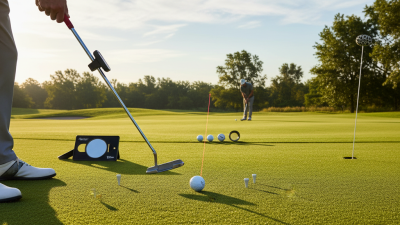




How to Practice Golf Putting at Home?

Improving your putting does not require a private club or expensive equipment. A quiet corner, a flat mat, and ten focused minutes can create meaningful progress. This is the practical value of golf putting practice at home.

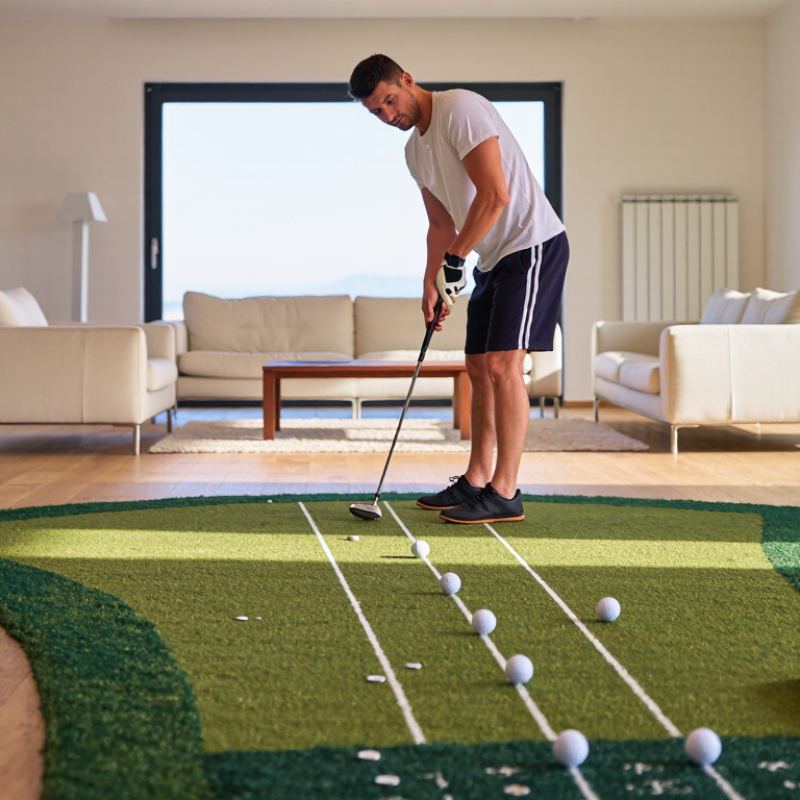
Dave Pelz, a respected golf instructor and putting researcher, has said, “Putting is the most important part of the game.” His view reflects a simple truth. Every round includes many putts, yet golfers often practice them without a clear target. At home, you can build better habits by focusing on distance control, face alignment, and consistent rhythm. Use a ruler, string line, or two clubs to create a narrow pathway. Roll five balls toward a small target, such as a coin or cup. Watch where each ball finishes.

Keep the setup simple.

A short routine is easier to repeat. Start with ten three-foot putts, then move to longer distances. Notice whether the ball starts left or right. Notice your pace too. A perfect result is not necessary. In fact, missed putts can reveal more than successful ones. They may show a poor setup, a hurried stroke, or weak distance judgment.

Still, indoor practice has limits. Carpet may behave differently from a real green. Space can also reduce the quality of your feedback. Do not mistake repetition for improvement. Record occasional sessions, review your stroke, and adjust one detail at a time. With patience and honest observation, home practice can make your putting more dependable when the pressure returns outdoors.
How to Practice Golf Putting at Home?

Preparing a Safe and Effective Home Putting Space

A safe home putting space begins with the floor, not the putter. Choose a level area with enough room for your stroke and follow-through. Keep windows, televisions, pets, and fragile furniture outside the practice zone. I prefer a quiet corner with a clear path of at least three metres. It reduces distractions and prevents careless damage.

Use a non-slip putting mat on a firm surface. A thin mat may reveal useful imperfections, but deep wrinkles can change the ball’s direction unfairly. Check the mat before every session. Place a small target at the far end, such as a cup or flat marker. For indoor practice, foam balls or reduced-impact balls are safer than standard golf balls. Still, inspect the surrounding wall and floor first. Safety matters more than realism.

Good practice needs repeatable conditions. Mark your starting position with removable tape, then practise short putts from different distances. Keep the target visible and use gentle lighting without glare. I once positioned my mat beside a doorway, and constant foot traffic broke my concentration. The setup looked convenient, but it was not effective. I also practiced too many straight putts, which created false confidence. Add slight breaks with a book or level wedge under one mat edge, but keep the slope modest and stable. Small details reveal more than expensive equipment.

Selecting the Right Equipment and Practice Surface

At home, putting practice starts with equipment that gives honest feedback. You do not need a full golf setup. A standard-length putter, twelve clean balls, and a simple alignment rod are enough. Choose a putter that feels balanced in your hands and sits squarely on the floor. A small tape measure helps you repeat distances accurately. Keep the balls identical, because mixed weights can change your feedback. Small details matter.

The practice surface deserves careful attention. A firm, level mat should roll the ball without sudden bumps or deep pile. Check its speed with a ten-foot putt, then compare several rolls. If the ball repeatedly breaks indoors, inspect the floor rather than changing your stroke immediately. I once blamed my alignment for missed putts, but a crooked mat caused the problem. Test the surface from both directions. It may reveal flaws.

For realistic practice, mark stations at three, six, and ten feet. Place a coin near the target line and try to roll the ball over it. Use a cup-sized target, but occasionally practice toward a smaller opening. This exposes weak speed control. A qualified golf coach would normally recommend varied distances instead of repeated tapping from one spot. I agree, although I still overuse short putts when confidence drops. That habit needs attention. Keep the mat clear, stable, and free from loose objects, especially when practicing around children or pets.

How to Practice Golf Putting at Home? - Selecting the Right Equipment and Practice Surface

Practice Element Recommended Specification Useful Home Setup Main Skill Developed Practice Guidance
Putting mat A level, low-pile surface with a straight alignment line; a length of about 8–12 ft is practical for most homes. Place it on a hard, flat floor and allow enough space for a full stroke and follow-through. Start direction, distance control, and consistent setup. Check that the mat lies flat. Wrinkles or raised edges can change the ball’s path.
Carpet or rug A firm, tightly woven carpet with a relatively even nap; avoid thick, soft, or heavily textured rugs. Use a straight section of floor and mark a target line with removable tape. Face control and starting-line accuracy. Treat carpet as a direction-and-stroke surface rather than a precise substitute for a consistent putting green.
Putting cup or target Use a regulation-size target when possible. A regulation golf hole is 4.25 in (108 mm) in diameter. Position the target at several distances, such as 3, 6, and 9 ft. Speed control and centered contact. Start with short putts, then increase distance only when the pace remains controlled.
Alignment stick or club A straight rod or spare club placed parallel to the intended start line. Place it just outside the ball line, leaving enough room for the putter head. Putter-face alignment and setup consistency. Do not aim the rod directly at the hole if the putt has a break; use it for the intended start line.
Gate drill markers Two tees, coins, or small objects positioned slightly wider than the putter head or ball. Create a gate 12–24 in (30–60 cm) in front of the ball. Stroke path and start-line control. Begin with a wide gate and narrow it gradually. Avoid making the drill so narrow that tension develops.
Putting mirror or reflective aid A stable reflective surface with a center line and sight lines, if available. Set it beneath or just in front of the ball so the eyes, ball, and target line can be checked. Eye position, ball position, and alignment. Use brief checks between repetitions rather than staring at the reflection during every stroke.
Golf balls Use the same type and condition of ball during a session; clean balls provide more consistent feedback. Keep three to six balls nearby for efficient repetition without crowding the practice area. Pace, roll, and impact feedback. Use a marked line on the ball to assess whether the ball rolls end-over-end.
Flat practice area A stable surface with minimal slope and no obstacles; a level floor is best for technical drills. Confirm the surface with a visual check or a small level before interpreting ball movement. Reliable feedback about face angle and stroke path. Do not diagnose technique from a ball that consistently moves because of an uneven floor.
Distance zones Mark short, medium, and long zones, for example 3 ft, 6 ft, and 9–12 ft. Use removable floor tape or small markers to identify each starting position. Length of stroke and pace control. Spend more repetitions on pace control than on repeated short, straight tap-ins.
Practice routine A focused 15–25 minute session with one technical goal and one distance-control goal. Use a simple sequence: setup checks, gate drill, distance drill, then pressure-based challenges. Transfer from mechanics to performance. Change the target or distance regularly so practice does not become purely repetitive.

Building a Consistent Putting Setup and Stroke

A consistent putting setup begins with a repeatable space at home. Choose a flat section of floor and place an eight-foot target line beside it. Check the slope with several putts before practicing seriously. Household carpets can hide small breaks.

Keep your feet shoulder-width apart and position the ball slightly forward of center. Your eyes should sit near the ball-to-target line. I use a club shaft on the floor to check this position. It feels awkward at first. That feeling matters.

Hold the putter lightly, with both hands working as one unit. Let your shoulders control the stroke while your wrists remain quiet. Practice a short takeaway and matching follow-through. The putter head should return squarely, not forcefully. A small gate made from two coins can test whether the putter travels consistently. Start with ten slow strokes, then hit balls toward a cup or small target.

Record a few attempts from behind and from the side. Review the setup, ball position, and finish. I sometimes discover that my stance changes when I become tired. That mistake is useful. It shows where my routine needs more attention. Keep the same sequence before every putt: stand behind the target, choose a line, set the face, and stroke without extra adjustments. Practice quality matters more than hitting a large number of balls.

Practicing Distance Control, Direction, and Green Reading

How to Practice Golf Putting at Home?

Practicing Distance Control, Direction, and Green Reading

At-home putting practice works best when each stroke answers a clear question. I use a flat mat, three targets, and six balls. For distance control, I mark landing zones at three, six, and nine feet. I make ten putts toward each zone, focusing on pace rather than the hole. The goal is to finish inside a small circle around each target. A ball stopping 18 inches short reveals weak speed control. One racing four feet past shows the same problem. I record the results honestly. My first attempt is usually worse than expected.

Direction requires a repeatable start line. I place two coins slightly wider than the putter head, then roll balls through the gate. If the ball clips a coin, the face was probably misaligned or the stroke drifted. I keep my eyes over the ball and avoid forcing a straight-back stroke. A quiet setup helps more than extra effort. Still, I sometimes chase perfect contact and lose natural rhythm.

Green reading at home can train careful observation. I place a thin book under one side of the mat to create a gentle slope. A string marks the intended starting line. I read the slope from both sides, predict the break, and then putt. Carpet cannot copy real grass perfectly. That limitation matters. I occasionally choose the wrong break, so I compare my prediction with the ball’s actual movement and adjust the next read.

Tracking Progress and Improving Your Home Putting Routine

A useful home putting routine needs measurable feedback, not endless repetition. In my sessions, I record distance, attempt number, makes, misses, and miss direction. A simple gate made from two coins shows whether the putter starts correctly. I also film five strokes from behind. The camera exposes habits that feel invisible, especially a drifting head.

Professional-tour putting data shows a sharp decline in success as distance increases. Eight-foot putts are made roughly half the time, while ten-foot putts fall to about four in ten. These figures come from official tour putting databases and provide realistic benchmarks. Do not expect every home session to match them. Home carpets are often faster, flatter, or less predictable than real greens.

Use three stations: three feet, six feet, and ten feet.

Make ten attempts at each distance, then log the results weekly.

Track start-line misses separately from poor speed.

A golfer may hole six of ten putts while still leaving four short. That score hides a weakness. I sometimes celebrate makes too quickly. That is a mistake.

Add a pressure set, such as making five consecutive three-foot putts before stopping. If one ball misses, restart the count.

Review progress every four sessions, not every night. Small samples can mislead. A missed ten-footer may reflect poor contact, not declining skill.

Keep the routine to 15 minutes, with one minute for notes. Consistency matters more than heroic practice.

Go to Top